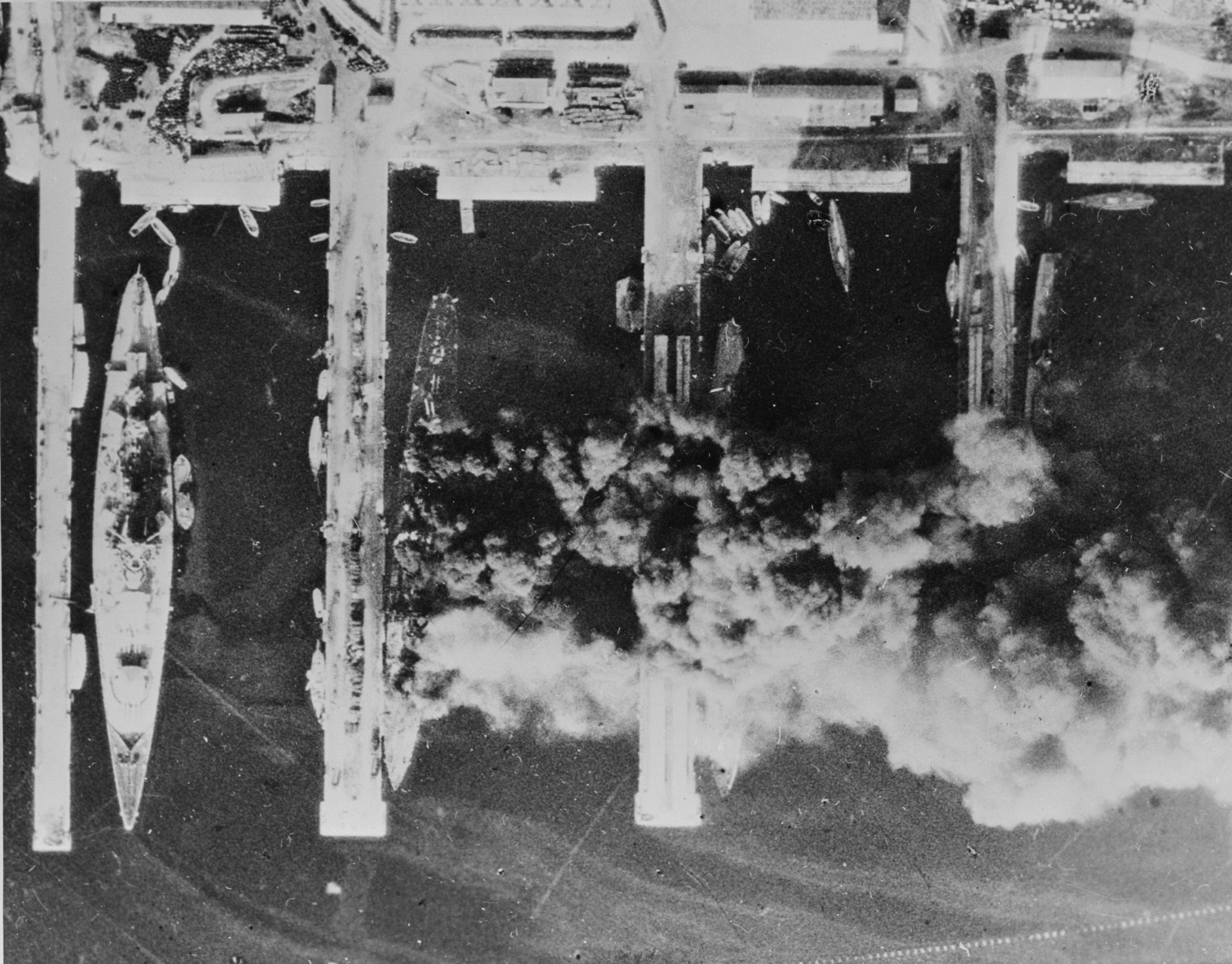
In the early hours of November 27, 1942, German tanks rolled into the great French naval base at Toulon. Their mission — Operation Lila — was to seize the most powerful fleet still under Vichy French control: three capital ships, seven cruisers, fifteen destroyers, twelve submarines, and scores of smaller vessels. What followed was one of the most extraordinary — and most futile — acts of the entire war. Rather than sail their ships to join the Allies, and rather than surrender them to the Germans, the French officers chose a third option. They destroyed their own fleet. By seven o'clock that morning, 77 warships were burning, exploding, or settling onto the shallow harbor bottom, while a pall of black smoke rose over Toulon that could be seen for fifty miles. It was the largest act of naval self-destruction since the German High Seas Fleet scuttled itself at Scapa Flow in 1919. And unlike Scapa Flow, it didn't have to happen.
The Fall of France and the Fleet Question
France's military collapse in the summer of 1940 surprised everyone — including the Germans. No one had imagined that the French army, widely considered one of the most powerful in the world and at least the equal of Germany's, could be defeated so thoroughly in a matter of weeks. The German offensive launched in May knocked France out of the war in barely a month. By June, the French government, convinced that further resistance was hopeless, was suing for an armistice. Neither British promises nor American threats could persuade them to fight on. The French would only have continued the war if Germany had demanded unacceptable terms at the armistice table — in which case the government planned to relocate to Algiers and carry on the fight from the colonies.
The one demand that would certainly have been unacceptable was the surrender of the French fleet. Officers in both the German and Italian navies would happily have rounded out their fleets with a few French warships, but Hitler firmly rejected these proposals. When he was on form, the Führer possessed a sharper sense of realpolitik than most of his subordinates, and he had no intention of presenting conditions he knew the French would refuse. He saw no strategic advantage in acquiring the French fleet that would justify the political cost. All Hitler wanted was for France to leave the war — and for the fleet not to fall into British hands.
Article 24 of the armistice agreement, which dealt with the fleet's fate, read as follows: "The French fleet — with the exception of that part left at the disposal of the French Government for the protection of French interests in the colonial empire — shall be collected in ports to be specified, and shall be demobilized and disarmed under German or Italian supervision. The peacetime home ports of vessels shall be designated as the ports of collection.
The German Government solemnly declares to the French Government that it does not intend to use for its own purposes in the war the French fleet stationed in ports under German supervision, except for units needed for coastal patrol and minesweeping. It further solemnly declares that it has no intention of raising claims to the French fleet at the conclusion of peace."
The French also managed to ensure that the ports designated for demobilization would not be in metropolitan France, but in colonial harbors safely distant from Germany and Italy. The nearly complete battleship Richelieu was sent to Dakar, the unfinished Jean Bart to Casablanca, the two battlecruisers and two older battleships to Mers-el-Kébir, and two other strong squadrons to Algiers and Beirut. These ports were difficult or impossible for the Axis powers to reach, yet easily monitored from the British bases at Gibraltar, Alexandria, and Freetown. The French were partly trying to reassure the British, who were visibly anxious about the fleet potentially falling into German hands.
Darlan's Orders and the British Attacks
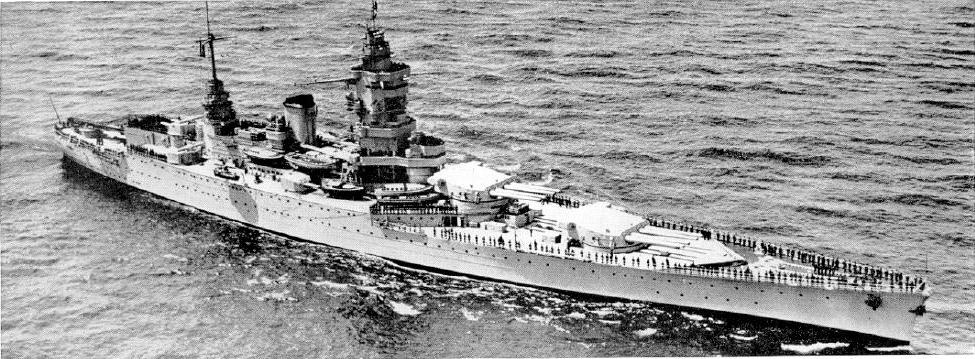
The British were also meant to be reassured by the orders issued by Admiral François Darlan, the commander-in-chief of the French Navy, directing that preparations be made to scuttle the fleet if any foreign power attempted to seize it. The first such order was issued even before the armistice was officially signed, on June 24, 1940, and included the following passage: "If the Armistice Commission changes the known conditions, or interprets them differently than hitherto, at the moment the new decision takes effect, warships are to be transferred to the United States without further orders, or if there is no other way to prevent them falling into enemy hands, they are to be scuttled."
These instructions were progressively tightened. Under the revised orders, captains were to scuttle their ships without waiting for further commands if there was even the slightest suspicion that any foreign power — including the British — was attempting to seize them. In one directive, Darlan went so far as to order that the scuttling was to be carried out even if a countermanding order arrived from himself or any member of the government. The French made sure the British learned of these instructions.
The British, however, did not find this reassuring enough. Having failed to persuade the French fleet to defect — only a single warship, the submarine Narval, voluntarily joined the British — the Royal Navy took matters into its own hands. Between July and September 1940, the British launched a series of attacks against French colonial ports, aiming to sink or disable the French warships.
Militarily, these operations produced mixed results. The September attack on Dakar was a humiliating failure, and even the assault on Mers-el-Kébir was only a partial success, since the battlecruiser Strasbourg — one of the primary targets — escaped unscathed. Strategically, the British achieved the opposite of their stated aims. The attacks turned even the previously pro-British French colonies against them, and the warships were withdrawn to Toulon — meaning the British had effectively driven the French fleet back into the arms of Germany and Italy.

The true purpose of the British attacks, however, was political rather than military. After a string of defeats at German hands, the British needed to boost the morale of their battered public with easy victories against the French — a reliable punching bag. They also needed to demonstrate to the Americans, who were financing the war effort, that British forces remained capable and determined. In those terms, the operations served their purpose.
Following the British attacks, the Germans permitted the French to keep a portion of the fleet at Toulon on active service. The squadron organized around Strasbourg — consisting of a few cruisers and about a dozen destroyers — was not demobilized. The ships even received minor modernizations, with some being fitted with French-developed Sadire radar sets. Chronic fuel shortages and funding problems meant the fleet was not particularly active, typically putting to sea only twice a month for short training exercises around the islands off Toulon. This was barely enough to maintain the crews' professional skills, but the squadron nonetheless represented the most formidable military force at the Vichy regime's disposal. Command of the squadron passed to Admiral Jean de Laborde, an old rival of Darlan, in September 1940.

Operation Torch and Darlan's Defection
From late 1940, after the British attacks subsided, an almost peacetime calm settled over the French-controlled ports. The fleet's smaller vessels occasionally escorted convoys to North African harbors, but they carefully avoided the operational theaters where British and Italian forces clashed. Two years later, however, the situation changed abruptly.
On November 8, 1942, a massive Anglo-American force landed in North Africa — Operation Torch — aiming to attack Rommel's forces in Egypt from the rear and secure a base for the planned invasion of Italy. The landing sites were the nominally neutral French North African colonies, chosen on the assumption that the French — who had already proved themselves a convenient punching bag — would offer only token resistance. The Americans imagined the French colonists would welcome them as liberators, and flew oversized Stars and Stripes from their ships' masts. Instead, the coastal batteries opened fire.
As in the earlier British attacks, the French resisted, and despite being outnumbered two to one and desperately short of fuel and ammunition, they gave the fumbling attackers — especially the Americans — a thorough mauling. Eisenhower himself described the performance of his forces in devastating terms: "The best description of our operations to date is that they violate every recognized principle of war, are in conflict with all operational and logistic methods laid down in textbooks, and will be condemned in their entirety by all future classes at staff colleges for the next twenty-five years."
The situation for the landing forces was far from encouraging in the first days. Had the French held out until the Germans retreating from Egypt could link up with them from Libya, things might have turned much worse. At that moment, however, Admiral Darlan unexpectedly appeared on the scene. By some curious coincidence, the fleet commander happened to be on a private visit to Algiers at the time of the landings. On November 11, the shrewd political operator Darlan — who after Mers-el-Kébir had demanded that France declare war on Britain — ordered the French forces to cease resistance. In return, he received command of French North African forces fighting alongside the Allies.
This was extremely awkward for the Anglo-American leadership, since their propaganda had portrayed Darlan — who as the Vichy regime's de facto leader simultaneously held the posts of foreign, interior, and defense minister — as Satan's own crony. But they too were forced to acknowledge that the French obeyed neither De Gaulle nor the self-appointed General Giraud, but Darlan.

Case Anton: Germany Seizes Vichy France
The Allied landings in North Africa caught the Germans by surprise, but not unprepared. The original German leniency toward France had been based on the assumption — shared by almost everyone — that the isolated British would be forced to throw in the towel within a few months. For the same reason, the Germans had even tried to dampen the outrage caused by the British attacks on French ports, and firmly opposed the idea of a French declaration of war on Britain — though in the summer of 1940, such a declaration might genuinely have delivered the coup de grâce to the British.
Within six months, however, it became clear that Britain was not going to quit, and with American and Soviet support, the British remained dangerous enemies. By late 1940, the German general staff — acknowledging that the war would not end anytime soon — drew up contingency plans for the eventuality that the French might rebel and switch to the British side. The planned operation to occupy the Vichy territories, Corsica, and Tunisia was initially codenamed Attila; its later version became Case Anton. Seizing the French warships at Toulon was an integral part of the plan, since the Germans could not allow the French fleet to join the British.
On November 11, in response to the Allied landings and Darlan's defection, Hitler ordered Case Anton to be executed. Italian troops occupied Corsica and the French Riviera, while German and Italian forces in Libya pushed into Tunisia. The German First Army swept into Vichy territory from Bordeaux, advancing parallel to the Spanish border, while the Seventh Army drove south from Paris through Vichy toward Toulon. The operation was commanded by General Johannes Blaskowitz.
The French had already noticed the intensified German troop movements days earlier and expected them to be the prelude to the long-anticipated invasion of the free zone. The army was alerted, but most French units were in no condition to offer effective resistance. The usable formations were concentrated around Toulon; the rest were ordered not to resist.
On November 11, the Germans informed French Prime Minister Pierre Laval — who happened to be in Munich — of the occupation. Pétain was notified by letter from Hitler. Simultaneously, the Führer's message was read on French radio: "The German army does not come as the enemy of the French people, nor as the enemy of their soldiers. It has only one aim: to repel, as an ally, every Anglo-American landing attempt, and together with the French army, to defend the French borders against enemy attacks."
The German advance met no resistance whatsoever. The Vichy government had already instructed French forces not to resist and to cooperate with the Germans as necessary. Not that they could have resisted much anyway — the French troops were poorly armed and nearly out of ammunition. German forces disarmed and mostly disbanded the French units, sending the soldiers home. By the evening of November 11, the first German troops reached the Mediterranean coast. By November 12, the occupation of the Vichy territories was essentially complete — only besieged Toulon remained in French hands.

The Fleet's Paralysis
The fate of Toulon and the French fleet was not yet decided. On November 11, negotiations began between the Germans and the Vichy regime, during which the Germans indicated they were willing to leave the fleet in French hands — provided the French were prepared to actively join them in fighting the Anglo-American forces. The Germans, who two years earlier — when it might actually have mattered — had rejected the idea of France declaring war on Britain, perhaps to avoid sharing the spoils and the glory, now expected the French to join them in what was by this point an increasingly hopeless situation.
Some people genuinely believed French cooperation was still possible, and that it still mattered. German fleet commander Admiral Erich Raeder, along with several other officers, argued that anti-British sentiment remained strong among French sailors and that the French could be persuaded to join or at least hand over their ships. But Raeder was also certain that if the Germans used force, the French would scuttle.
Hitler, however, had no faith in the French whatsoever, and from the beginning was prepared to seize Toulon by force if the French showed no willingness to cooperate, handing the fleet over to the Italians. Overruling his officers' objections as usual, the Führer on November 19 ordered Blaskowitz to prepare Operation Lila — the seizure of Toulon.
At the French naval headquarters, the news of the North African landings probably shook Admiral Laborde the hardest. His mandate was just expiring, and his designated successor, Vice Admiral Pierre Gouton, was due to take over within days. In light of the crisis, the naval minister decided it would be unwise to change commanders, and the handover was postponed indefinitely. The unfortunate Laborde would have to see the coming events through — and then answer for them.
A total of 173 vessels were stationed at Toulon at this time. The majority — 135 units — were warships withdrawn from active service under the armistice terms, ships under repair, obsolete vessels still used for various purposes, and smaller auxiliary units such as tugs, workshop ships, and supply vessels. Most were not operational, with empty ammunition and fuel stores. Much of their personnel had been redirected to coastal forts or harbor duties. These ships were under the command of Vice Admiral André Marquis.
The remaining 38 ships belonged to the Forces de haute mer (High Seas Fleet) under Admiral Laborde's direct command. Besides smaller units — minesweepers, patrol boats, submarines — the squadron's main striking power consisted of 17 surface warships organized around the battlecruiser Strasbourg: three heavy cruisers, two light cruisers, and eleven destroyers. These ships were relatively well equipped, their crews were at full strength, they had sufficient ammunition, and they carried enough fuel to reach North Africa.
When the first reports of the landings arrived, the Forces de haute mer lit their boilers and went to battle stations. Laborde expected the fleet to be deployed against the Anglo-American forces — he himself recommended this course — and prepared to put to sea. Instead of sailing orders, however, he received only a message from the naval minister, Rear Admiral Gabriel Auphan, instructing both Laborde and Marquis to avoid bloodshed and, if possible, use negotiations to prevent foreign troops from entering the port facilities, coastal forts, or boarding the warships. If that proved impossible, they were to scuttle the ships.
The bewildered Laborde stood down on November 11. The following evening, however, he again ordered the boilers lit, presumably because Darlan's order to sail and join the Allies had reached him. But no sailing order came from the high command. On the morning of November 13, Laborde telephoned the naval minister, who told him a strong British squadron had been spotted near Barcelona. Fearing the British intended to intercept the departing French fleet, Auphan refused to authorize Toulon's evacuation. Laborde stood down again at six in the morning, then got in his car and drove to Vichy to find out in person what the devil was going on.
In Vichy on November 15, Pétain and Auphan received the fleet commander, briefed him on the situation, and once again ordered him to do nothing for the time being — but to scuttle the ships if the Germans tried to seize them. After the official meeting, Auphan — who would resign two days later — took Laborde aside and privately suggested he sail with the operational ships and join the Allied forces. Laborde refused unless he received a formal order. Auphan was unwilling to issue one. And so nothing changed — nobody did anything.
The French paralysis had deep roots. The Vichy government did not want to part with the only military formation that still represented real power and, even if it could no longer meaningfully influence events, still lent the regime a certain prestige and served as a bargaining chip in negotiations. The fleet's leadership, meanwhile, lacked the courage to take the initiative and decide on defection without orders. They prepared for the one thing they had clear and unambiguous instructions to do: self-destruction. The senior officers, including Laborde himself, also detested the British and were nauseated by the thought of serving alongside them, almost certainly under British command.
Pétain's government, moreover, still believed they could reach an accommodation with the Germans. If they showed willingness to cooperate, Toulon and the fleet might remain in French hands and under French control. This belief was reinforced by one of Hitler's telegrams from November 11, which stated: "In accordance with the negotiations and at the express wish of Admiral Auphan, the Führer requests a written declaration from the commanders of the Toulon fleet, stating that they will refrain from all hostile acts against the Axis forces and will defend Toulon with all their strength against the government's Anglo-Saxon and French enemies. In that case, the fortifications of Toulon will not be occupied."
The Tightening Noose
The rank and file, and the junior officers, no longer shared the leadership's trust in the Germans. They didn't particularly like the British either, but De Gaulle's Free French were growing increasingly popular, especially now that it was becoming clear they were on the winning side. On the ships' decks, sailors openly cheered De Gaulle and sang the marching songs of the "Free French." The fleet's leadership found the mood alarming and suspected it was being stirred up by British agents who would try to exploit it. After November 11, numerous arrests were carried out to rid the fleet of unreliable elements, and the crews were kept aboard their ships as much as possible. Officers were required to sign declarations pledging continued loyalty to the government. Several refused.
The Germans, meanwhile, tightened the ring around Toulon. Around 50,000 French soldiers and sailors were stationed in and around the city, but they too were poorly equipped and short of ammunition. Vichy had already instructed them to refrain from armed resistance in the event of a German attack, and instead to delay the German advance through negotiations and roadblocks — buying enough time for the fleet to carry out the scuttling. On November 26, German troops occupied the Hyères Islands off Toulon and the airfield there. This, together with the intensifying German and Italian troop movements around the city, were unmistakable signs of an imminent attack.
Operation Lila: The German Assault
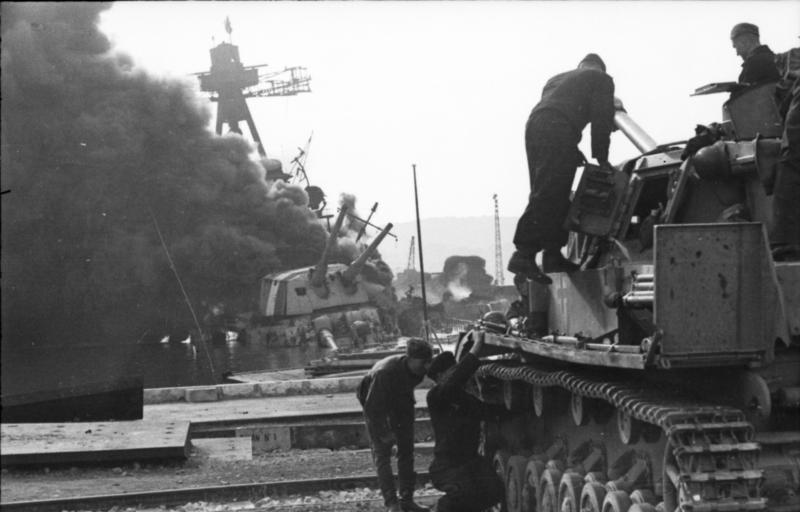
German troops received the order to execute Operation Lila on the evening of November 26. The first units moved toward Toulon at 1:00 AM on November 27. The attacking force consisted primarily of elements of the 7th Panzer Division, reinforced by units of the 2nd SS Panzer Division Das Reich. The first assault group approached from the east, its primary objective the capture of Fort Lamalgue, which served as the headquarters of the Toulon fleet and of Admiral Marquis. By seizing the fort, the Germans hoped to sever telephone and radio communications between the command post and the harbor, so the crews aboard the ships would learn of the German arrival too late for the scuttling to succeed. After taking the fort, this group was also tasked with seizing the coastal batteries, the Arsenal, and the submarine base.
The second group, approaching from the west, occupied the airfield and the coastal fortifications on the Saint-Mandrier peninsula, which guarded the harbor's western approaches. Two more groups followed in the wake of the first two, their mission being to seize the harbor itself and the warships moored there. A naval detachment — Marinedetachment Gumprich — was assigned to these groups. German and Italian torpedo boats and submarines were deployed off the harbor, and mines were laid to prevent any ships from escaping. The troops were ordered to avoid violence and not to open fire first.
At 4:30 AM, Hitler's latest letter to Pétain arrived in Vichy: "You, Marshal, know that all claims that Germany intends to seize the French fleet are mere fabrication or deliberate lies. … Therefore, being aware of the many acts of perfidy committed by French officials, generals, and admirals, I have ordered the immediate occupation of Toulon, in order to prevent the ships from sailing or being destroyed."
The first assault group from the east arrived at Toulon shortly after 4:00 AM and, after sporadic shooting, captured Fort Lamalgue and arrested Admiral Marquis. The Germans, however, were trying to be polite, so it took about half an hour before they had occupied every room of the headquarters and escorted the French out. This was more than enough time for Marquis's deputy, Rear Admiral Marcel Édouard Robin, to phone the Arsenal from his office and alert them to the German presence. From there, the alarm spread rapidly across the entire harbor.
Although numerous signs had pointed to an imminent German attack, the assault itself still caught the French by surprise — just as every British, American, and German attack since 1940 had caught them by surprise without exception. The assault groups advanced quickly and met virtually no resistance. Around 5:00 AM, the Germans reached the submarine base, where most of the operational submarines cast off from the quay, their crews intending to scuttle them in the deeper waters of the harbor. The Germans opened fire on the departing boats but could not prevent them from sailing.
Several submarines did not stop in the middle of the bay. Dodging the German mines, they left the harbor, dived immediately, and set course for the North African coast or neutral Spanish waters. The Casabianca and Marsouin eventually reached Algiers safely, the Glorieux made it to Oran, and the Iris, running out of fuel, put into neutral Barcelona. One other vessel also managed to escape — the small tug Léonor Fresnel, previously used for laying and maintaining the harbor's buoys, booms, and net barriers, which sailed all the way to Algiers unscathed.
It would not have been a great feat for the surface ships of the Forces de haute mer to do the same. Most of the warships on active service, unless they were undergoing repairs, were reasonably well supplied with ammunition and had enough fuel to reach North Africa or neutral Spain. Sailing after dark, the ships could comfortably have reached the Spanish territorial waters — barely 200 kilometers from Toulon as the crow flies — by dawn. The location of the German mines off the harbor was known, and the destroyers would have had little difficulty keeping the German torpedo boats at bay. More than two weeks had elapsed between the occupation of the Vichy territories and the seizure of Toulon — more than enough time for the fleet to prepare such an operation.
But without orders, no one dared take any initiative, and no one dared give the order. Since 1940, the French had really only prepared for one thing: self-destruction. That, at least, they had planned with engineering precision. Ultimately, Darlan himself was probably to blame. Back in the summer of 1940, he had issued orders requiring the ships to be scuttled in any situation where there was even the possibility that foreign forces — including the Anglo-Saxons — might get their hands on the French fleet. The scuttling order could not be overridden by any other command, not even one issued by Darlan himself. And that is precisely what happened: on November 12, Darlan ordered the fleet to sail and join the Allies, but at Toulon his order was ignored. The French commanders knew only one option for the event of an attack: self-destruction.

The Scuttling
The German troops got lost in the vast grounds of the Arsenal and reached the harbor entrance a full hour behind schedule. They met no armed resistance — the French delayed them only with roadblocks and bureaucratic obstruction. The latter is meant literally: the Germans, who in accordance with their orders were also trying to avoid violence, spent long minutes at the harbor gate waiting for the duty officer to painstakingly fill out the proper entry authorization forms.
This gave the crews aboard the ships more than enough time to prepare for destruction. Laborde learned of the German arrival around 5:00 AM and immediately ordered preparations for scuttling. He also gave instructions to open fire on any unauthorized personnel approaching the ships. The warships' decks erupted in frantic activity. The scuttling charges — and the explosive charges placed inside the gun barrels — had already been positioned earlier; now they were wired up and the detonators armed. On several ships, the oil tank covers were opened and explosive charges placed inside to ignite the fuel. Squads armed with hammers rampaged through the vessels, smashing optical rangefinders, compasses, radios, searchlights, fire-control computers, radar sets, cast-iron machine components — anything that could be broken. Electrical cables were cut, turbines destroyed with explosives, and boilers fired up with the feedwater lines shut off, so the boiler tubes would quickly burn through.
Under the original instructions, the sea valves were to be opened on one side only, so the ships would capsize as they sank. A few days earlier, however, new orders from Vichy specified that the ships should be sunk on an even keel, so they would not suffer irreparable damage and could be repaired after the war. For Strasbourg, the 12-meter depth of Toulon harbor was in any case insufficient to capsize the ship.
The original procedure also called for the crews to be evacuated only at the very end, after the charges were detonated, so they could continue the destruction for as long as possible. In the event, however, most captains began by sending the crews ashore, leaving only the demolition parties aboard.

The first German tanks appeared on the harbor quays around 5:30 AM. Laborde now gave the order to scuttle — to detonate the charges. At almost the same moment, a telephone call came through from Vichy: Prime Minister Laval and the new naval minister, Vice Admiral Maurice Le Luc, were trying to order the fleet to cease resistance and cancel the scuttling. The line was terrible, however, and soon cut entirely when the Germans severed the cables. The order never reached Laborde.
A brief firefight broke out around Strasbourg and the heavy cruiser Foch, between the first German tanks and the ships' light-caliber weapons. The Germans briefly withdrew, then pushed back onto the quays when their main force arrived. Around 6:00 AM, the first German officer made it aboard the French flagship, where he found Admiral Laborde standing on the quarterdeck. When ordered to surrender his ship, Laborde replied that Strasbourg was already sinking. The battlecruiser looked perfectly intact from the outside, and the Germans thought the French were bluffing. Twenty minutes later, however, a series of explosions ripped through the ship — the charges destroying the guns and machinery detonated. Dense black smoke poured from every opening, and the ship slowly settled onto the bottom.
The other battlecruiser, Dunkerque, was in dry dock, her damage from Mers-el-Kébir still not fully repaired. Her captain, Commander Georges Amiel, was reluctant to carry out the scuttling order. He demanded written instructions, and only agreed to destroy his ship after officers from other vessels persuaded and threatened him. Dunkerque's equipment was smashed or blown up, and the dock was flooded.

The old battleship Provence, also damaged at Mers-el-Kébir and decommissioned, was moored at the quay. Her crew simply opened the sea valves, and she slowly settled to the bottom — with German soldiers already standing on her decks. Although naval detachments had been assigned to the assault groups, in most cases it was army officers and soldiers who boarded the ships first, and they had little idea how to prevent them from being scuttled. The French officers also tried to keep the Germans talking, using "negotiations" to buy time for the demolition crews working below decks to finish their destructive work.
Of all the large French warships, the heavy cruiser Dupleix came closest to being captured intact. Located deep inside the harbor, she was among the first ships the Germans boarded. The German sailors found the open sea valves and closed them. Her captain, Commander Jacques Moreau, then ordered his men to light the scuttling charges at the magazine flood valves with shortened fuses, ensuring they would explode before the Germans could reach them. Whether by accident or design, the charges detonated the 203mm ammunition and then the torpedoes. The crew was evacuated before the magazine explosion, but the shrapnel killed five French sailors on nearby ships and on the quay, and wounded several more. Ironically, none of the Germans on Dupleix's deck or in her vicinity was injured. The ship was reduced to an unsalvageable wreck and burned for ten days.
The heavy cruiser Colbert, moored alongside Strasbourg, was scuttled under similar circumstances — by detonating the magazine charges while Germans were already on deck. Aboard the cruiser flagship Algérie, Vice Admiral Émile Lacroix was also reluctant to carry out the scuttling, believing it violated the armistice agreements. He too demanded written orders, but when German troops appeared alongside, he finally gave the command. The time was bought with negotiations: the cruiser's captain told the German officers he was merely waiting for the admiral's order and would then surrender the ship. When Lacroix finally appeared, he simply informed the Germans they had a few minutes to get off the ship before it blew up. The subsequent detonation ignited Algérie's fuel stores, and the cruiser burned for three full weeks.
The captain of the cruiser Marseillaise, worried that the Italians might be able to raise and repair the ship if she sank upright in the shallow water, opened the sea valves on one side only — against orders — so the cruiser would capsize. The Germans gave him enough time: arriving at the quayside, they politely requested permission to come aboard. When this was refused, they stayed on the quay and watched as Marseillaise caught fire and slowly rolled over.

By 7:00 AM, virtually every French warship in Toulon harbor was sinking or already on the bottom. Most were ablaze. Their crews had smashed or blown up every piece of equipment they could reach. A thick black cloud of smoke from the burning ships blanketed the city, and the harbor's oil-covered waters would remain too polluted to swim in for two years. In total, 77 warships — including three capital ships, seven cruisers, 15 destroyers, 13 torpedo boats, and 12 submarines — sank to the harbor floor. Another 46 smaller vessels fell into German hands in damaged condition. French casualties during the operation amounted to 12 killed and 26 wounded. Total German casualties: one man wounded.
The Meager Spoils
The Germans captured slim pickings at Toulon, but they were primarily interested in preventing the fleet from falling into British hands rather than capturing it for themselves. What they really wanted was not the big warships but the smaller vessels useful for minesweeping and patrol duties, and they captured several dozen of these intact or in quickly repairable condition. The Italians were rather more disappointed. Having been given control of the harbor, they immediately set about inspecting the wrecks to see if any could be salvaged for their own fleet. The larger warships were in hopeless condition, and their scrapping began the following year. On several ships, however, either there had not been enough time to complete the planned destruction, or German sailors had defused the charges and closed the sea valves in time. A few cruisers and destroyers appeared salvageable, and after being raised were either repaired locally or towed to Italian shipyards.
The Italians judged a total of three cruisers — Foch, Jean de Vienne, and La Galissonnière — eleven destroyers, nine submarines, and 21 smaller vessels to be repairable. (They later abandoned plans to repair Foch, or convert her into an aircraft carrier, and began scrapping her in the spring of 1943.) Shortages of labor and raw materials, combined with Allied bombing raids, hampered the work, and by the time of the Italian armistice only a single ship had been returned to service: the destroyer Panthère. Built in the 1920s, the Italians used her mainly for transport. Her most notable cargo was the deposed Fascist dictator Mussolini, who was carried aboard her to La Maddalena in Sardinia after his arrest. The destroyer was scuttled again on September 9, 1943 — this time by the Italians themselves, to keep her out of German hands.
Two other Toulon-salvaged destroyers, Tigre and Trombe, were on the verge of completing their refits when Italy left the war. Both ships passed to the Free French forces, who finished the repairs. The destroyers served through the final year of the war and were eventually scrapped in the 1950s.

Aftermath: Everyone Claims Victory
In a grotesque twist, everyone was satisfied with how things turned out. The Allies were satisfied because the fleet had not fallen into Axis hands. The Axis powers were satisfied because it had not fallen into Allied hands. And the French managed to convince themselves that the "glorious scuttling" had restored the fleet's honor, so they were satisfied too. American newspapers ran headlines reading "Glory to Toulon."
Not everyone agreed. Darlan, for once in agreement with De Gaulle, bitterly criticized the fleet's commanders for ignoring his order to join the Allies. The criticism was essentially fair — the ships had the capability to do so. The French commanders had once again delivered a pathetic performance, demonstrating not a shred of initiative or willingness to take risks. Their actions ensured the French fleet could add yet another entry to its long list of glorious defeats.
Darlan was deeply shattered by the destruction of his life's work. He survived his fleet by only a few weeks. On Christmas Eve 1942, he was shot dead in Algiers by a barely 20-year-old assassin, Fernand Bonnier de La Chapelle, who was captured and quickly executed before anyone could ask inconvenient questions. The investigation lasted one hour, the trial fifteen minutes, and the sentence was carried out on the morning of December 26 — two days after the assassination. Bonnier's coffin had been ordered before the trial began. It was widely believed even at the time that Bonnier was an agent of the SOE, Britain's sabotage and subversion service, and had carried out the killing on British instructions. Eisenhower was so furious that he banned SOE agents from American headquarters. Bonnier was rehabilitated by a French court in December 1945, which declared that Darlan's murder had been committed "in the interests of France." With Darlan's death, and the sidelining of the politically inept General Giraud, the path to power opened for the British protégé De Gaulle.
The Reckoning
After the war, France embarked on sweeping purges that could charitably be described as a bloodbath. The "Free French" and the glorious Resistance executed thousands of civilians and soldiers accused of collaboration, and new prisons had to be built to house the officials and military officers sentenced for their roles under the Vichy regime. Admiral Laborde was also put on trial, charged with having prevented the fleet from joining the Allies. He was sentenced to death for treason, though the sentence was almost immediately commuted to life imprisonment. He was released under amnesty in September 1951, and partially rehabilitated a few years later — meaning he became eligible for an admiral's pension. Laborde died on July 30, 1977, at the age of 99.
The fleet's other commander, Admiral Marquis, was also brought to trial. The court probably took into account that the ships under his command could not have left Toulon even if they had wanted to, and Marquis got off with five years in prison. He too was released under amnesty in 1950, and the Supreme Court fully rehabilitated him six years later, restoring his rank and pension — which Marquis did not enjoy for long, as he died the following year.
The ships remaining at Toulon suffered further damage from Allied bombing raids, and the vessels that had been raised were sunk a second time by the Germans, the Italians, or Allied bombers as the war neared its end. A few ships that had survived in relatively decent condition, such as Strasbourg, were slated for repair after the war, but even these would have required complete rebuilding at a cost the French could not afford, and the plans were ultimately abandoned. After the war, every wreck was raised and scrapped; the work of clearing the harbor was not completed until the mid-1950s.

Frequently Asked Questions
Why did the French scuttle their fleet at Toulon?
The French scuttled their fleet on November 27, 1942, to prevent it from being captured by German forces during Operation Lila. Standing orders issued by Admiral Darlan in 1940 required the fleet to be destroyed if there was any risk of it falling into foreign hands. The fleet commanders chose self-destruction over either surrendering to the Germans or sailing to join the Allies.
Could the French fleet have escaped to join the Allies?
Almost certainly yes. The operational warships had enough fuel to reach North Africa or neutral Spain, and their crews were familiar with the locations of the German mines outside the harbor. Several submarines and a small tug successfully escaped during the scuttling itself. The fleet had over two weeks between the German occupation of Vichy France and the attack on Toulon to prepare for departure, but no commander was willing to act without formal orders — and no one in authority was willing to give them.
How many ships were destroyed at Toulon?
A total of 77 warships were scuttled, including three capital ships (the battlecruisers Strasbourg and Dunkerque, and the old battleship Provence), seven cruisers, 15 destroyers, 13 torpedo boats, and 12 submarines. Another 46 smaller vessels were captured by the Germans in damaged condition. Five submarines and one tug escaped to Allied or neutral ports.
What happened to Admiral Laborde after the war?
Admiral Jean de Laborde was tried and sentenced to death for treason for preventing the fleet from joining the Allies. The sentence was commuted to life imprisonment. He was released under amnesty in 1951 and partially rehabilitated, receiving an admiral's pension. He died in 1977 at the age of 99.
What happened to Admiral Darlan?
Admiral François Darlan was assassinated in Algiers on December 24, 1942, by Fernand Bonnier de La Chapelle, a young man widely believed to have been acting on behalf of the British SOE. Darlan had defected to the Allies during the Operation Torch landings but survived his fleet by only a few weeks. His assassin was executed two days later after a fifteen-minute trial.
Did the Germans salvage any ships from Toulon?
The Germans themselves were mainly interested in smaller vessels for patrol and minesweeping. The Italians, who were given control of the harbor, attempted to salvage several larger ships. They judged three cruisers, eleven destroyers, and nine submarines to be repairable, but by the Italian armistice in September 1943, only one destroyer — Panthère — had been returned to service. Two more destroyers, Tigre and Trombe, were nearly complete and eventually served under the Free French flag.