
Let's be real — when most people think of drones changing the face of warfare, they picture something coming out of the United States or Israel. So when a Turkish drone started dominating headlines, destroying armored columns, and becoming a symbol of national pride for at least three different countries, the world had to sit up and pay attention. The Bayraktar TB2 wasn't just a weapon. It was a statement. A relatively cheap, deceptively simple unmanned aerial vehicle built by a private Turkish company managed to do what decades of defense industry marketing had promised but rarely delivered: it gave small nations the ability to punch far above their weight class. But like many stars that burn bright, the question today is uncomfortable but necessary — is the TB2 still relevant, or has its moment already passed?
What Is the Bayraktar TB2?
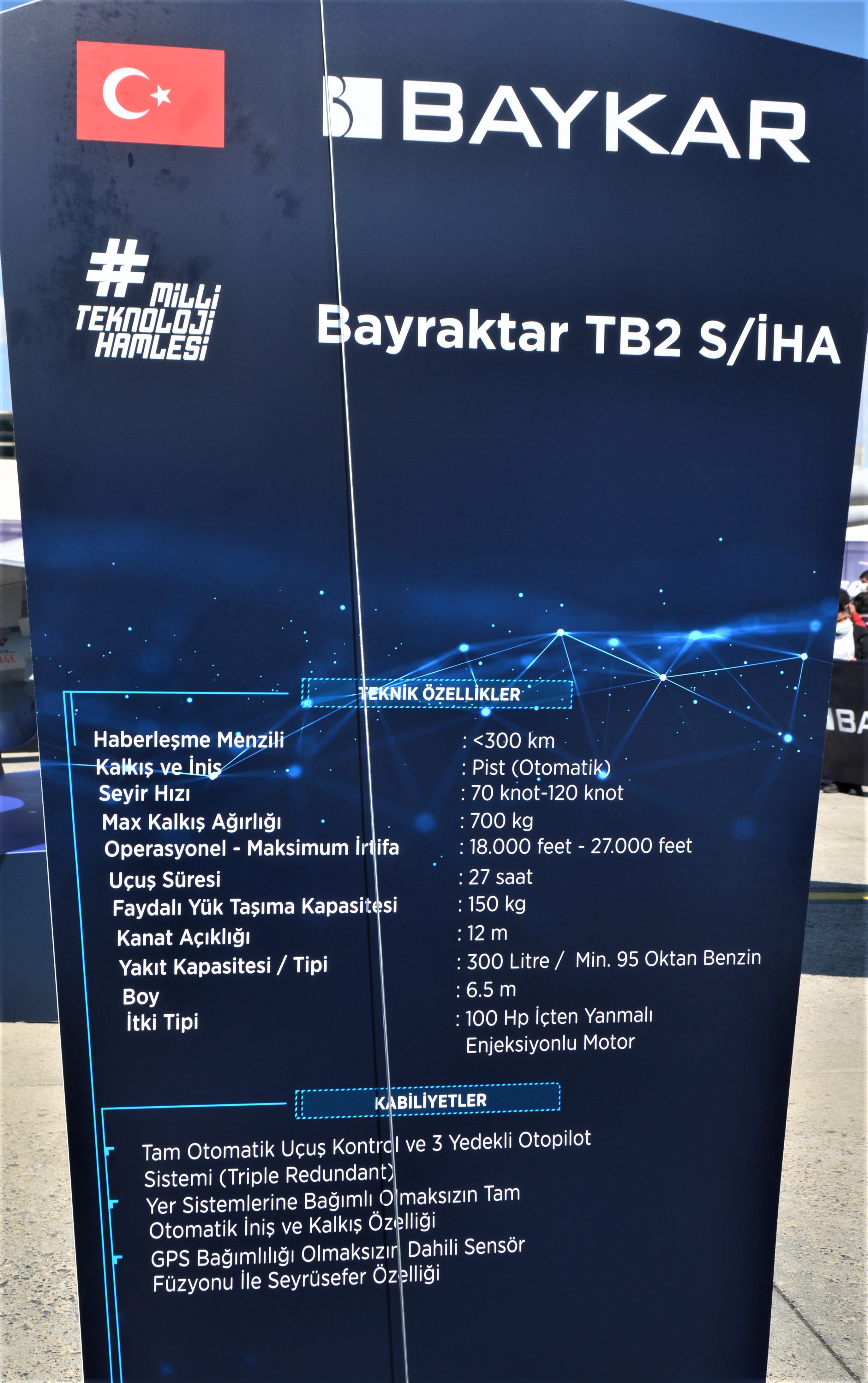
The Bayraktar TB2 is a medium-altitude, long-endurance (MALE) unmanned aerial vehicle developed by Baykar Technologies, a privately held Turkish defense company. It's designed for intelligence, surveillance, and reconnaissance (ISR) missions, as well as armed strike operations. Think of it as a flying sniper — patient, precise, and devastatingly effective when used correctly. The aircraft has a wingspan of 12 meters, a maximum takeoff weight of around 700 kilograms, and can loiter over a target area for up to 27 hours at altitudes up to 25,000 feet.
What made the TB2 stand out from the crowd was its combination of affordability, lethality, and the fact that Turkey was willing to export it. That last part is crucial. Western countries — particularly the United States — have always been notoriously cautious about selling armed drones. The Missile Technology Control Regime (MTCR) and various export control regulations made acquiring American Predators or Reapers a diplomatic nightmare for most countries. Turkey wasn't bound by the same constraints, and that opened an enormous market that nobody else was serving. At roughly $1–5 million per airframe, depending on configuration and contract terms, the TB2 represented extraordinary value compared to Western equivalents costing ten to twenty times as much.
The Origins: How Turkey Built a Drone Empire
Baykar Technologies isn't a government agency or a state-owned defense conglomerate. It's a privately held company founded by the Bayraktar family, which started out making automotive electronics and gradually pivoted into aerospace. The company's drone program didn't emerge from a blank slate — it was built on a foundation of frustration. Turkey had long struggled to acquire armed drones from the United States. Washington repeatedly blocked or delayed sales of the MQ-1 Predator and MQ-9 Reaper, citing concerns about Turkey's human rights record and the potential use of such systems against Kurdish populations. That political stonewalling pushed Ankara to develop its own indigenous capability, and Baykar was the company that delivered.
You can't talk about the TB2 without talking about Selçuk Bayraktar. He's the chief technology officer of Baykar, holds a PhD from the Massachusetts Institute of Technology, and — perhaps most dramatically — is married to the daughter of Turkish President Recep Tayyip Erdoğan. That personal connection generated enormous outside commentary and accusations of favoritism, but the engineering credentials are real and the results speak for themselves. Selçuk became something of a celebrity engineer in Turkey, the kind of figure who appears on magazine covers and inspires schoolchildren to pursue aerospace careers. The TB2 is as much his personal project as it is a corporate one.

Design Philosophy and Technical Specifications
Development on what would become the TB2 began in the mid-2000s. The design philosophy was deliberately pragmatic — the team wasn't trying to build something cutting-edge in every dimension. Instead, they focused on building something that worked reliably, could be produced at scale, and could be exported without triggering international arms control nightmares. The aircraft has a conventional layout with a pusher propeller configuration, a twin-boom tail, and a high-wing design. It looks almost elegantly simple compared to the sleek stealth drones coming out of American programs — and that simplicity is intentional.
The TB2 is powered by a Rotax 912 engine — a commercially available Austrian aircraft engine that you'd find in light sport aircraft around the world. Later production models transitioned to the Turkish-made TEI PD170 engine, reducing foreign dependency. This is both a strength and a vulnerability: commercially sourced components keep costs low and production fast, but they also mean that sanctions or export restrictions on key parts can disrupt the supply chain. The drone carries an electro-optical and infrared sensor turret for targeting, and can be armed with up to four Roketsan MAM-L or MAM-C laser-guided smart micro munitions. These lightweight precision bombs weigh between 6.5 and 22 kilograms — small, but surgically precise.

From Runway to Reality: Testing and Early Service
The TB2 entered extensive trials with the Turkish military starting around 2014. Turkish Air Force and Gendarmerie evaluators put the aircraft through rigorous operational testing in southeastern Turkey, where it was used for surveillance missions against PKK militants in rugged mountain terrain. This wasn't theoretical testing — the aircraft was earning its credentials in a live operational environment, tracking insurgent movements through valleys and mountain passes where manned aircraft would have been expensive overkill.
By 2015, the TB2 had received full operational clearance and began equipping Turkish military units in meaningful numbers. The iterative feedback loop between operators and engineers during this period was a key reason the system matured so quickly. Baykar was essentially running a real-world beta test at scale — every mission generated data that fed directly back into design improvements. By the time the TB2 saw its first major combat deployments, it had already accumulated thousands of flight hours in genuinely hostile conditions.
Combat Debut: Syria and the Learning Curve
Turkey's operations in northern Syria gave the TB2 its first serious combat exposure. During Operation Euphrates Shield (2016–2017), Operation Olive Branch (2018), and Operation Peace Spring (2019), TB2s flew surveillance and strike missions alongside manned aircraft and special forces. The results were encouraging — the drones proved reliable, their targeting was accurate, and the MAM-L munitions performed as advertised against soft targets and light vehicles. But the opposition in these operations wasn't particularly sophisticated in terms of air defense. Kurdish and Syrian rebel forces lacked the kind of integrated air defense networks that would truly test the TB2's survivability.
The real test came in February–March 2020, during Operation Spring Shield, when Turkey directly confronted Syrian government forces backed by Russian air defense advisors. Turkey claimed to have destroyed significant quantities of Syrian military equipment using TB2s during this brief but intense escalation. The operation demonstrated that the TB2 could operate effectively even in environments where some level of air defense existed — though the exact nature and density of those defenses remains debated.
Libya: The Turning Point
Libya changed everything. When Turkey intervened in support of the Government of National Accord (GNA) against Khalifa Haftar's Libyan National Army (LNA) in 2019–2020, TB2s operating over Libyan airspace encountered Pantsir-S1 air defense systems supplied by the United Arab Emirates and operated — allegedly — with Russian technical support. What happened next shocked defense analysts around the world.
TB2s systematically hunted and destroyed Pantsir systems. Video footage of the kills went viral on social media and defense forums. A medium-altitude drone costing around $5 million per unit was defeating air defense systems that cost ten times as much. The tactical playbook used — often employing one drone as bait to provoke the Pantsir's radar into emitting while another TB2 fired from a different angle — was clever and devastatingly effective. The Pantsir crews, many of whom appeared to have limited training, were caught flat-footed by an adversary they hadn't trained to fight. Suddenly, everyone was paying attention to Ankara.
The Libyan campaign also revealed something important about the TB2's real strength: it wasn't just the drone itself, but the system of systems around it. Turkish electronic warfare aircraft jammed enemy communications, Turkish-supplied air defense systems protected the GNA's rear areas, and the TB2s operated as part of a coordinated combined-arms approach. The drone was the tip of the spear, but the shaft was Turkish military doctrine and operational planning.
Nagorno-Karabakh: The TB2's Defining Moment
If Libya put the TB2 on the map, the 44-day war between Azerbaijan and Armenia in the fall of 2020 made it a legend. Azerbaijan deployed TB2s in large numbers against Armenian armored columns, artillery positions, and air defense systems. The results were catastrophic for Armenia.
Drone footage — released by Azerbaijan in a constant stream throughout the conflict — showed TB2s methodically destroying tanks, trucks, howitzers, and radar systems. It looked like a video game, and it became one of the most-watched military content libraries in internet history. Armenia's military, equipped largely with Soviet-era equipment and lacking effective counter-drone capabilities, was overwhelmed. The TB2 became a symbol of asymmetric power — a relatively small, relatively poor country using affordable drones to defeat a conventionally larger force. Defense ministries around the world scrambled to both acquire TB2s and figure out how to defend against them.
The Nagorno-Karabakh war also demonstrated the psychological dimension of drone warfare. The constant release of strike footage — grainy thermal images of vehicles exploding, soldiers scattering — had a demoralizing effect on Armenian forces and a galvanizing effect on Azerbaijani public opinion. The TB2 wasn't just a weapon; it was a propaganda tool, a morale weapon, and a recruiting poster all at once. Azerbaijan's victory reshaped the South Caucasus and made the TB2 the most sought-after weapons export in the developing world.
Ukraine and the TB2: From Folk Song to Hard Reality
Ukraine had been operating TB2s since receiving its first batch in 2019, and when Russia launched its full-scale invasion in February 2022, the drones saw action almost immediately. Early in the war, TB2s scored some notable kills against Russian armor and logistics convoys. Most famously, a TB2 was reportedly used as a decoy or distraction during the attack on the Russian Black Sea Fleet's flagship, the missile cruiser Moskva, which was subsequently struck by Ukrainian Neptune anti-ship missiles and sank on April 14, 2022. The exact role of the TB2 in the Moskva's sinking remains debated, but the incident cemented the drone's legendary status.
Ukraine even wrote a folk song about the TB2 — simply titled "Bayraktar" — which became something of a wartime anthem, racking up millions of views on YouTube. The drone had achieved genuine cultural status, something no weapons system had managed since the Kalashnikov. However, as the war evolved and Russia deployed more sophisticated electronic warfare systems and adapted its layered air defense posture, the TB2's effectiveness declined significantly. It became too risky to operate in contested airspace against a peer adversary with dense radar coverage, GPS jamming, and dedicated counter-drone units. Ukraine's TB2s were increasingly kept out of high-threat zones and relegated to surveillance missions in quieter sectors.
Why the TB2 Was So Effective — And Why It Isn't Anymore
The TB2's early success was partly a product of timing. Adversaries in Libya, Nagorno-Karabakh, and early Ukraine simply hadn't built their tactics, training, and procedures around countering this type of threat. Like any new weapon system in military history — from tanks at Cambrai to submarines in the Atlantic — the TB2 benefited enormously from being unexpected. Operators hadn't trained against it, doctrine hadn't accounted for it, and the psychological shock of watching your equipment get destroyed by an invisible enemy overhead created panic disproportionate to the actual damage inflicted.
But here's the uncomfortable truth: the TB2 is not particularly stealthy. It has a relatively large radar cross-section, flies at predictable altitudes and speeds, and uses a commercially available engine that produces a recognizable infrared signature. Against modern integrated air defense systems — Russian S-300 and S-400 networks, or even upgraded short-range systems like the Tor-M2 — the TB2 is extremely vulnerable. The drone also relies on GPS for navigation and radio-frequency links for command and control, both of which can be jammed or spoofed by capable adversaries. Russia deployed some of the world's most sophisticated electronic warfare equipment in Ukraine, and the TB2's operational tempo dropped dramatically once those systems were fully active.
Military organizations learn. After watching Libya and Nagorno-Karabakh, every serious military on the planet updated its counter-UAV doctrine. Dispersion, camouflage, radar emissions discipline, mobile short-range air defense systems, and dedicated counter-drone units have all become higher priorities. The window of tactical surprise that the TB2 exploited so brilliantly has largely closed.
The TB2 in a Crowded Market
The drone market has also gotten a lot more crowded since the TB2's glory days. China's Wing Loong II and CAIG CH-4/CH-5 series offer comparable capabilities at similarly competitive prices, and Beijing has shown even fewer qualms than Ankara about exporting to authoritarian regimes. Iran's Shahed series — particularly the Shahed-136 loitering munition, which Russia has used extensively in Ukraine — has demonstrated that even cheaper, simpler systems can be highly disruptive when used in mass. Israel continues to produce world-class ISR and strike UAVs like the Hermes 900 and Harop. And the United States is developing next-generation systems that make the TB2 look like a first draft.
Despite its declining mystique against peer adversaries, the TB2 remains widely operated. More than 35 countries have either purchased or expressed interest in the system, including Ukraine, Azerbaijan, Qatar, Morocco, Ethiopia, Somalia, Kyrgyzstan, Albania, Poland, and several others. For many of these operators — particularly in Africa and Central Asia — the TB2 remains genuinely useful, because the threat environments they face don't include sophisticated air defenses or electronic warfare capabilities. The drone that's "outdated" against Russia is still highly capable against non-state armed groups or conventionally weaker neighbors.

What Comes Next: The Akıncı and TB3
Baykar isn't resting on its laurels. The company has developed the Bayraktar Akıncı — a much heavier, higher-flying MALE drone with significantly greater payload capacity, satellite communications, and the ability to carry larger munitions including cruise missiles and the SOM-J standoff weapon. The Akıncı is essentially what the TB2 would look like if you gave it a decade of upgrades and a much bigger budget. With a maximum takeoff weight of 6,250 kilograms and an operational ceiling of 40,000 feet, it's a fundamentally different class of aircraft — closer to the American MQ-9 Reaper than to the TB2.
The Bayraktar TB3, meanwhile, is designed specifically for carrier operations from Turkey's TCG Anadolu amphibious assault ship, featuring a folding wing design for below-deck storage and a more powerful engine. These next-generation systems represent Baykar's attempt to stay ahead of the curve as the competition intensifies and the lessons of Ukraine filter through every defense ministry on Earth. Whether they can replicate the TB2's extraordinary commercial and military success remains to be seen — the element of surprise, after all, only works once.
The TB2's Real Legacy
Whatever happens next, the Bayraktar TB2 has permanently altered several foundational assumptions about modern warfare. It proved that affordable, export-ready armed drones could be strategically decisive. It demonstrated that small nations can punch far above their weight class when equipped with the right technology and the willingness to use it. And it fundamentally accelerated the global conversation about counter-drone capabilities, forcing every serious military to treat UAV threats as a first-order concern rather than an afterthought. It also validated Turkey as a serious defense exporter — something that would have seemed far-fetched just fifteen years ago.
The TB2's moment of near-invincibility has passed, replaced by a more nuanced reality where it excels against unsophisticated opponents but struggles against peer adversaries with modern air defenses and electronic warfare. It isn't irrelevant — far from it — but it is no longer the unchallenged game-changer it appeared to be in 2020. The TB2's real legacy might not be the battles it won, but the conversations it started. And those conversations — about the democratization of airpower, the vulnerability of conventional forces to cheap precision weapons, and the terrifying speed at which the offense-defense balance can shift — are still very much ongoing.
Frequently Asked Questions
How much does a Bayraktar TB2 drone cost?
A single Bayraktar TB2 airframe costs approximately $1 to $5 million depending on configuration, but a full operational system — including ground control stations, data links, spare parts, and multiple aircraft — runs considerably higher, often cited in the range of $60–70 million for a complete battery of six drones.
What weapons does the Bayraktar TB2 carry?
The TB2 is typically armed with Roketsan MAM-L (22 kg) and MAM-C (6.5 kg) laser-guided smart micro munitions. These lightweight precision-guided bombs are specifically designed for the drone's modest payload capacity and can defeat light armored vehicles, radar systems, artillery positions, and personnel in the open.
Why did the TB2 become less effective in Ukraine over time?
As the war progressed, Russia deployed dense electronic warfare systems that disrupted the TB2's GPS navigation and command-and-control links. Russian air defenses also became better organized, more mobile, and more alert to the drone threat. The TB2 was designed for permissive or semi-permissive airspace, not for operations against a peer adversary with layered, integrated air defenses.
How does the Bayraktar TB2 compare to the MQ-9 Reaper?
The MQ-9 Reaper is a much larger, more capable, and far more expensive platform. It carries heavier weapons (including Hellfire missiles and 500-lb JDAMs), flies higher and faster, and has satellite communications for beyond-line-of-sight control. However, the Reaper costs roughly $30 million per unit and is subject to strict U.S. export controls. The TB2 trades raw capability for affordability and availability — and for many operators, that trade-off is exactly right.
Which countries operate the Bayraktar TB2?
As of 2025, more than 35 countries have ordered or operate the TB2, including Turkey, Ukraine, Azerbaijan, Qatar, Morocco, Ethiopia, Poland, Albania, Somalia, Kyrgyzstan, Bangladesh, and several others. It is one of the most widely exported armed drone systems in history.
Is the Bayraktar TB2 still being produced?
Yes. Baykar continues to manufacture the TB2 and fulfill export orders, even as the company shifts increasing focus toward next-generation platforms like the Bayraktar Akıncı heavy combat drone and the TB3 carrier-capable variant designed for Turkey's TCG Anadolu amphibious assault ship.
What is the Bayraktar Akıncı?
The Bayraktar Akıncı is Baykar's next-generation heavy combat drone. With a maximum takeoff weight of 6,250 kg, an operational ceiling of 40,000 feet, and the ability to carry cruise missiles, it represents a major step up from the TB2. It entered service with the Turkish military in 2023 and is being offered for export.