

Picture this: you're a German infantryman somewhere on the Eastern Front in the winter of 1943. A Soviet T-34 is grinding toward your position, its tracks churning frozen mud, its 76mm gun swinging in your direction. Your anti-tank gun was destroyed three hours ago. Your Panzerschreck team is dead. You have one weapon left — a crude steel tube with an oversized warhead stuck on the front, a simple folding sight, and a single propellant charge. It cost less to manufacture than a decent pair of boots. And if you use it correctly, at the right range, it will punch straight through the armor of that T-34 and kill everyone inside. That weapon was the Panzerfaust. And the story of how it came to exist, how it performed in the most brutal land combat of the 20th century, and how it changed the relationship between infantry and tanks forever is one of the most important — and most underappreciated — stories in the history of modern warfare.
What Was the Panzerfaust?
The Panzerfaust — literally "armored fist" or "tank fist" in German — was a series of single-shot, disposable anti-tank weapons developed by Nazi Germany and used extensively from 1943 to the end of World War II in 1945. It consisted of a simple steel launch tube containing a propellant charge and a large hollow-charge (HEAT — High Explosive Anti-Tank) warhead that protruded from the front of the tube, far larger in diameter than the tube itself.
The weapon was designed from the outset to be cheap, simple, and entirely disposable. There were no moving parts beyond the trigger mechanism and folding sights. There was no optical equipment, no complex fuzing system, no reloading capability. You fired it once, dropped the empty tube, and that was the end of the weapon's useful life. In an era when most military equipment was engineered for durability and reuse, the Panzerfaust's deliberately throwaway design was a radical departure — and it was precisely that disposability that made it a viable mass-production solution to Germany's increasingly desperate anti-tank problem.
The family went through three primary variants during the war — the Panzerfaust 30, the Panzerfaust 60, and the Panzerfaust 100 — each named for the approximate effective range in meters. Each successive variant addressed the most glaring limitation of its predecessor. And collectively, they were produced in numbers that dwarf virtually every other individual infantry weapon of the conflict.
The Problem That Created the Panzerfaust — Germany's Anti-Tank Crisis
The Eastern Front Shock

When Germany invaded the Soviet Union in June 1941 with Operation Barbarossa, German infantry carried a range of anti-tank weapons — primarily the 37mm Pak 36 anti-tank gun and various anti-tank grenades. Against the Soviet light tanks of 1941, these weapons were adequate. Against the T-34 medium tank and the KV-1 heavy tank, they were embarrassingly inadequate.
The T-34 was a genuine shock to German arms. Its sloped armor deflected shells that would have penetrated flat-plate designs. Its 76mm gun outranged the standard German anti-tank weapons. And it was appearing in increasing numbers precisely as German supply lines were stretching to their limits. The 37mm Pak 36 earned the humiliating nickname "Heeresanklopfgerät" — army door-knocker — because its rounds literally bounced off T-34 armor.
The Need for a Soldier's Weapon
German infantry needed something that could kill a T-34 reliably, at infantry combat ranges, without requiring a dedicated gun crew and all the logistical support that entailed. The weapon had to be cheap enough to produce in enormous quantities. It had to be simple enough to be operated with minimal training — a vital consideration given that by 1943 Germany was running through trained infantry at a catastrophic rate. It had to be light enough for a single infantryman to carry. And it had to be lethal enough to reliably defeat current Soviet tank armor.
The shaped charge technology offered the key. A shaped charge could defeat significantly more armor than a kinetic energy projectile of equivalent size and weight, because it didn't rely on velocity — it relied on chemistry and physics. A focused jet of superplastic copper that could cut through steel like a hot needle through butter, regardless of the velocity at which the warhead arrived. That meant you could deliver lethal anti-tank capability in a small, light, slow-moving package — perfect for an individual infantry weapon.
Development History — From Concept to Battlefield
Hugo Schneider AG and Dr. Heinrich Langweiler
The Panzerfaust was developed by HASAG — Hugo Schneider Aktiengesellschaft — a German manufacturing company based in Leipzig that had diversified into weapons production during the war. The key engineer behind the design was Dr. Heinrich Langweiler, who had been working on recoilless weapon concepts since the early war period.
Langweiler's insight was elegantly simple: if you accepted that the weapon would be disposable — used once and discarded — you could strip away virtually all the engineering complexity associated with reloadable weapons. No chamber to withstand repeated firing. No breech mechanism. No barrel rifling. No sighting system beyond the most rudimentary open sight. The result would be crude, but crude was fine as long as it worked when it needed to.
The development timeline was remarkably compressed. Initial concept work began in 1942, prototypes were tested in early 1943, and the first production version was delivered to troops in the summer of 1943. From initial requirement to battlefield deployment in roughly a year was extraordinarily fast and reflected both the urgency of Germany's anti-tank situation and the simplicity of the design.
The Faustpatrone — The Proof of Concept
Before the Panzerfaust family was properly established, there was the Faustpatrone — a slightly earlier and cruder design that served as the direct predecessor. The Faustpatrone klein used a 34mm warhead and the Faustpatrone I used a 50mm warhead, with armor penetration limited to around 140mm. Combat experience quickly identified the key areas for improvement: effective range was too short, accuracy was difficult, and the warhead needed to be larger. These lessons fed directly into the Panzerfaust 30 and its successors.
The Panzerfaust Family — Understanding the Variants
Panzerfaust 30 — The Original
The Panzerfaust 30 entered production in 1943 and began reaching frontline units in significant numbers by late 1943. The "30" designation referred to its nominal effective range of 30 meters — a figure that immediately illustrates both the weapon's tactical concept and its most severe limitation. Thirty meters is the length of a modest house. At that range, the tank's machine guns could easily kill the soldier attempting to engage it.
The Panzerfaust 30 used a 149mm diameter warhead capable of penetrating approximately 140mm of armor — sufficient to defeat the T-34/76 from most angles and the Sherman from virtually any angle. The tube was 98.5cm long and the complete weapon weighed approximately 5.1 kilograms. The sighting was a crude folding leaf with a hole, used with a raised post on the warhead fin assembly. At 30 meters, you either had the sight picture right at the moment of firing or you missed.
Panzerfaust 60 — The Improvement
Field experience rapidly identified the most critical flaw: 30 meters was simply too close for practical combat use. The response was the Panzerfaust 60, entering service in 1944. The doubled effective range was achieved through a larger propellant charge that imparted greater muzzle velocity, and an improved sight system. The warhead retained approximately 200mm armor penetration capability in its improved production form.
At 6.8 kilograms, the Panzerfaust 60 was heavier than its predecessor, but the doubled effective range was considered an essential tradeoff. At 60 meters, a skilled firer had a marginally better chance of surviving the engagement and a significantly better sight picture. The Panzerfaust 60 became the most widely produced variant of the family, manufactured in staggering quantities during 1944.
Panzerfaust 100 — The Refined Killer
The Panzerfaust 100 represented the most refined version of the original single-shot disposable concept to reach large-scale production. Entering service in late 1944, it again doubled the effective range to 100 meters through a further enlarged propellant charge and significantly improved sighting arrangements with range markers and a refined aiming method.
The Panzerfaust 100 also introduced a reusable trigger mechanism — a small improvement that mattered more than you'd think. The trigger assembly was the most complex part of the weapon, and now it could be pulled from the spent tube and snapped into a new loaded one, saving materials in a war economy that was running out of everything. The warhead was upgraded to a 150mm design with penetration capability of about 200mm — enough to kill any Allied tank from the side or rear, and most medium tanks from the front at close range.
Panzerfaust 150 and 250 — The Unrealized Potential
Development was underway on the Panzerfaust 150 and the semi-reusable Panzerfaust 250 when the war ended. The Panzerfaust 150 was just beginning to reach units in the final weeks. The Panzerfaust 250 was a fundamentally different design — a reusable launcher that could be reloaded multiple times, moving the concept closer to the RPG philosophy that would dominate post-war design. Neither had meaningful operational impact, but both influenced post-war development.
Technical Specifications — How the Panzerfaust Worked
The Launch Tube and Propellant
The launch tube was made from mild steel — not hardened, not rifled, designed for nothing beyond a single firing cycle. The propellant was black powder — primitive but reliable, cheap, and available in enormous quantities. It burned more slowly than modern propellants and generated significantly more visible smoke and flash on firing, immediately revealing the firer's position. But its simplicity and availability made it the only realistic choice for a mass-production disposable weapon.
The propellant pushed the warhead out at about 45–60 meters per second depending on the variant — painfully slow by any ballistic standard, but it didn't matter. A shaped charge warhead doesn't need speed to kill a tank. The real problem was the back-blast: the propellant gases venting out the back of the tube with a roar, creating a kill zone several meters behind the firer. Fire one of these in a room and you might kill yourself. German training hammered this point relentlessly.
The Oversized Hollow Charge Warhead
At 149mm diameter on early variants and 150mm on the Panzerfaust 100, the warhead was dramatically oversized relative to the launch tube — it sat on top of a simple steel stick that fit inside the tube, giving the weapon its characteristic appearance of a large ball perched on a thin rod. The warhead used the Munroe effect — shaped charge physics — to defeat armor.
The Shaped Charge Effect — Physics of Armor Defeat
Inside the warhead was a copper-lined conical cavity set within a high explosive fill. When detonated, the explosive collapsed the copper cone, forming a high-velocity jet of superplastic copper traveling at approximately 8,000 meters per second. This jet could punch through steel armor many times thicker than the warhead itself — the penetration was largely independent of striking velocity. Both the copper liner and the armor it struck briefly behave like fluids at the extreme pressures involved, and the jet penetrates by flowing through the armor rather than smashing through it.
The caveat is that the shaped charge must detonate at the correct standoff distance from the armor surface. Too close, and the jet hasn't fully formed. Too far, and the jet has dispersed. The Panzerfaust's fuze was designed to detonate at the optimal standoff, and the large warhead diameter helped achieve the correct geometry consistently.
How to Fire a Panzerfaust — The Soldier's Perspective
Training was deliberately minimal — by design. The weapon's entire conception was based on the assumption that it would be issued to soldiers with limited training, used once in an emergency, and discarded. The firing procedure was simple enough to be memorized in minutes: hold the tube under the arm, fold up the sight leaf, cock the firing pin, estimate range, select the appropriate sight aperture, and squeeze the trigger.
Training emphasized two points above all else. First, ensure there was nothing behind you — the back-blast could kill or seriously injure anyone within several meters. Second, aim at the sides or rear of the tank — the front armor of later tanks could potentially defeat even the Panzerfaust's penetrator, while side and rear armor was far thinner.
What training couldn't prepare soldiers for was the experience of actually engaging a moving tank at 30 to 100 meters. Many soldiers who fired Panzerfausts in combat described the engagement as one of the most terrifying experiences of the war. At those ranges, success and survival were separated by fractions of a second.
Combat Performance — What the Numbers Say
Armor Penetration Across Variants
The Panzerfaust 30 achieved approximately 140mm of penetration against vertical steel armor. The Panzerfaust 60 improved this to approximately 200mm. The Panzerfaust 100 matched or slightly exceeded 200mm. To put these figures in context: the T-34/76's frontal armor was 45–52mm thick; its side armor was 45mm. The American M4 Sherman had 51mm of frontal hull armor. Any Panzerfaust variant could defeat any of these tanks from the side with complete reliability.
Effective Range — The Critical Limitation
The effective range figures in the Panzerfaust's name were somewhat optimistic in practice. German after-action reports consistently described the practical engagement range as 20–40% shorter than the nominal figure. Panzerfaust 30 users typically engaged at 20–25 meters. Panzerfaust 60 users worked at 40–50 meters. Panzerfaust 100 users at 70–80 meters. These were still remarkably short engagement distances, but they were achievable in the ambush and urban combat scenarios where the Panzerfaust was most effective.
The Panzerfaust on the Eastern Front
From Kursk to Bagration
The Battle of Kursk in July 1943 was the largest tank battle in history and the moment the strategic initiative shifted permanently to the Soviets. The Panzerfaust was just beginning to reach frontline units, and its presence at Kursk was minimal. But the tactical lessons — particularly the devastating effectiveness of Soviet armor in depth — accelerated Panzerfaust production and distribution.
By Operation Bagration in June 1944, Panzerfaust availability had improved dramatically. German infantry were using them in significant numbers against Soviet armored spearheads. They couldn't stop the offensive — one of the most decisive operations of the war — but they extracted a meaningful toll, and Soviet tank crews consistently identified the Panzerfaust as one of the most feared threats during the advance.
Urban Warfare — Berlin and the Final Months
The Panzerfaust truly came into its own during the urban warfare of the final months. Urban combat fundamentally favors the defender with short-range anti-tank weapons. Tanks cannot use their range advantage, cannot maneuver freely, and are channeled into streets where ranges are measured in tens of meters. A Panzerfaust firer in a building window, basement, or behind a rubble pile had a reasonable chance of delivering a lethal hit before being spotted.
The Battle of Berlin in April–May 1945 saw Panzerfaust use on a massive scale, with Soviet accounts describing entire streets defended by small groups of Volkssturm and Wehrmacht soldiers equipped with little more than Panzerfausts and desperation.
The Panzerfaust in the West — Normandy to the Rhine
Normandy and the Bocage Fighting
Allied troops first encountered the Panzerfaust in significant numbers during the Normandy campaign. The bocage country was ideal Panzerfaust terrain — dense hedgerows created natural ambush positions at close range, funneled Allied armor into predictable lanes, and provided concealment for German infantry. American and British tank crews learned quickly to fear the Panzerfaust, and the Sherman's relatively thin armor was no protection at all from a hit at 30–60 meters.
The psychological effect drove the development of improvised supplemental armor — sandbags piled on hulls, spare track sections welded to frontal armor — that became ubiquitous in Allied armored formations by the summer of 1944.
The Battle of the Bulge
Germany's Ardennes offensive deployed Panzerfaust-armed infantry extensively in the forested terrain of Belgium and Luxembourg. The dense forests and winter conditions created close-range engagement opportunities, and Allied armor suffered meaningful losses. The Bulge demonstrated that even in offensive operations, the Panzerfaust could be used aggressively by motivated troops willing to close to engagement range.
The Volkssturm and the Panzerfaust — A Desperate Combination

No discussion of the Panzerfaust is complete without addressing its deployment with the Volkssturm — the German home defense militia established in September 1944, composed of men too old, too young, or too physically unfit for regular service. Boys as young as 16 and men in their 60s were conscripted and issued Panzerfausts as their primary anti-tank weapon — sometimes their only weapon beyond a rifle.
It was practical and it was tragic, and you can't separate the two. Practical because the Panzerfaust genuinely was simple enough that a 16-year-old with ten minutes of instruction could use it to kill a tank at close range — the whole point of the design. Tragic because these were kids and old men being fed into a meat grinder in a war everyone except the regime knew was already lost. Volkssturm Panzerfaust teams did score kills against Allied and Soviet armor. They were also killed in huge numbers. Their story is one of the darkest chapters in the weapon's history — proof that the Panzerfaust worked exactly as designed, used in the worst possible circumstances by people who never should have been holding it.
Allied Responses and Countermeasures
Allied and Soviet tank crews developed practical responses to the Panzerfaust threat. The most universal was improvised supplemental armor — sandbags, spare track sections, and wire mesh screens mounted at standoff distances from the main armor — designed to prematurely initiate the shaped charge warhead, disrupting the jet formation and reducing penetration.
The bigger change was doctrinal. The Panzerfaust taught every army the same lesson the hard way: tanks rolling through close terrain without infantry walking alongside them were going to die. It sounds obvious now, but combined-arms doctrine evolved directly in response to the Panzerfaust threat during the Normandy fighting, the Hürtgen Forest, the Rhine crossings, and the advance into Germany. Those lessons stuck. They became standard doctrine that persisted through the Cold War and beyond.
Production Numbers — Germany's Most Mass-Produced Anti-Tank Weapon
Total Panzerfaust production across all variants from 1943 to 1945 is estimated at approximately 8 million units — by a considerable margin the largest production run of any anti-tank weapon in the conflict. For comparison: the American Bazooka reached approximately 476,000 units in the M1/M1A1 variants. The Soviet Union produced approximately 1.1 million PTRS and PTRD anti-tank rifles.
A Panzerfaust 60 required approximately 2.5 kg of steel, minimal machining, and a manufacturing time of a few hours at most. Factories without sophisticated machine tools could produce them. In a war economy under constant bombing and increasing material shortages, those characteristics were invaluable.
The Panzerfaust vs. Allied Equivalents
vs. American Bazooka
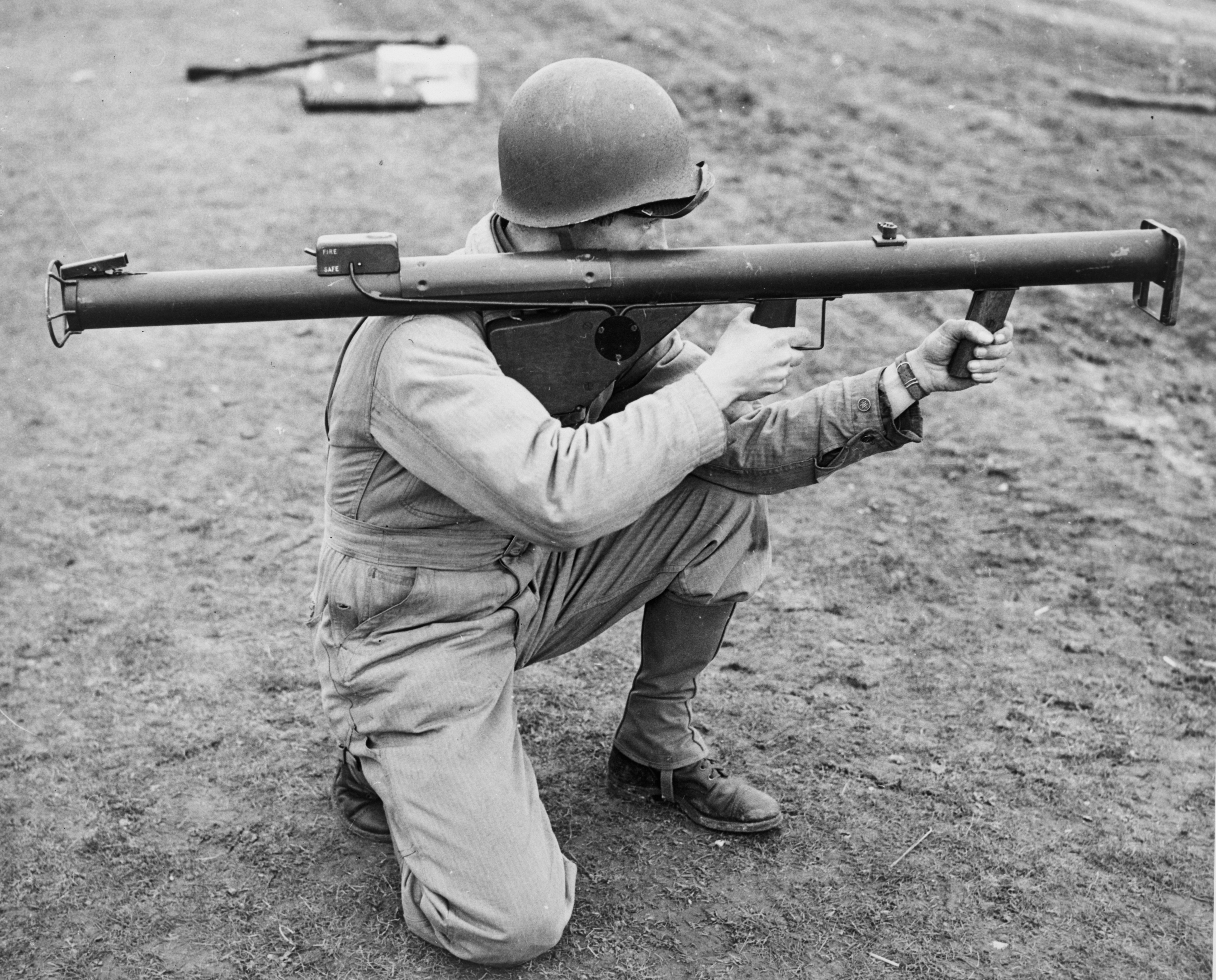
The American M1/M1A1 Bazooka was the Panzerfaust's most direct contemporary. The Bazooka was reusable but more complex and heavier. Its M6A3 rocket achieved approximately 75–80mm penetration — considerably less than the Panzerfaust 60 or 100's 200mm. The Bazooka had longer effective range (100–150 meters for the M9 variant), but its inferior penetration meant that against heavier German tanks, it was often only effective against side and rear armor.
vs. British PIAT
The British Projector Infantry Anti-Tank used a powerful spring mechanism rather than a rocket or propellant charge. It was famously unpleasant to operate — requiring considerable physical strength, generating massive shock on firing, and having significant accuracy limitations. The PIAT had approximately 100mm penetration and no back-blast (a significant advantage in buildings), but weighed 15.9 kilograms and was far more demanding to use. British soldiers had a complicated relationship with the PIAT — the Panzerfaust's simplicity was generally preferred by those with experience of both.
vs. Soviet RPG-43 and RPG-6
The Soviet anti-tank grenades — RPG-43 and RPG-6 — were hand-thrown, requiring the soldier to approach to well under 20 meters. The RPG-43 penetrated approximately 75mm; the RPG-6, approximately 100mm. Both were simple and cheap, but requiring throwing range made them far more dangerous to use than even the Panzerfaust 30. Soviet troops who encountered Panzerfausts consistently recognized their superiority.
Post-War Legacy and Influence
The Direct Line to the RPG-7
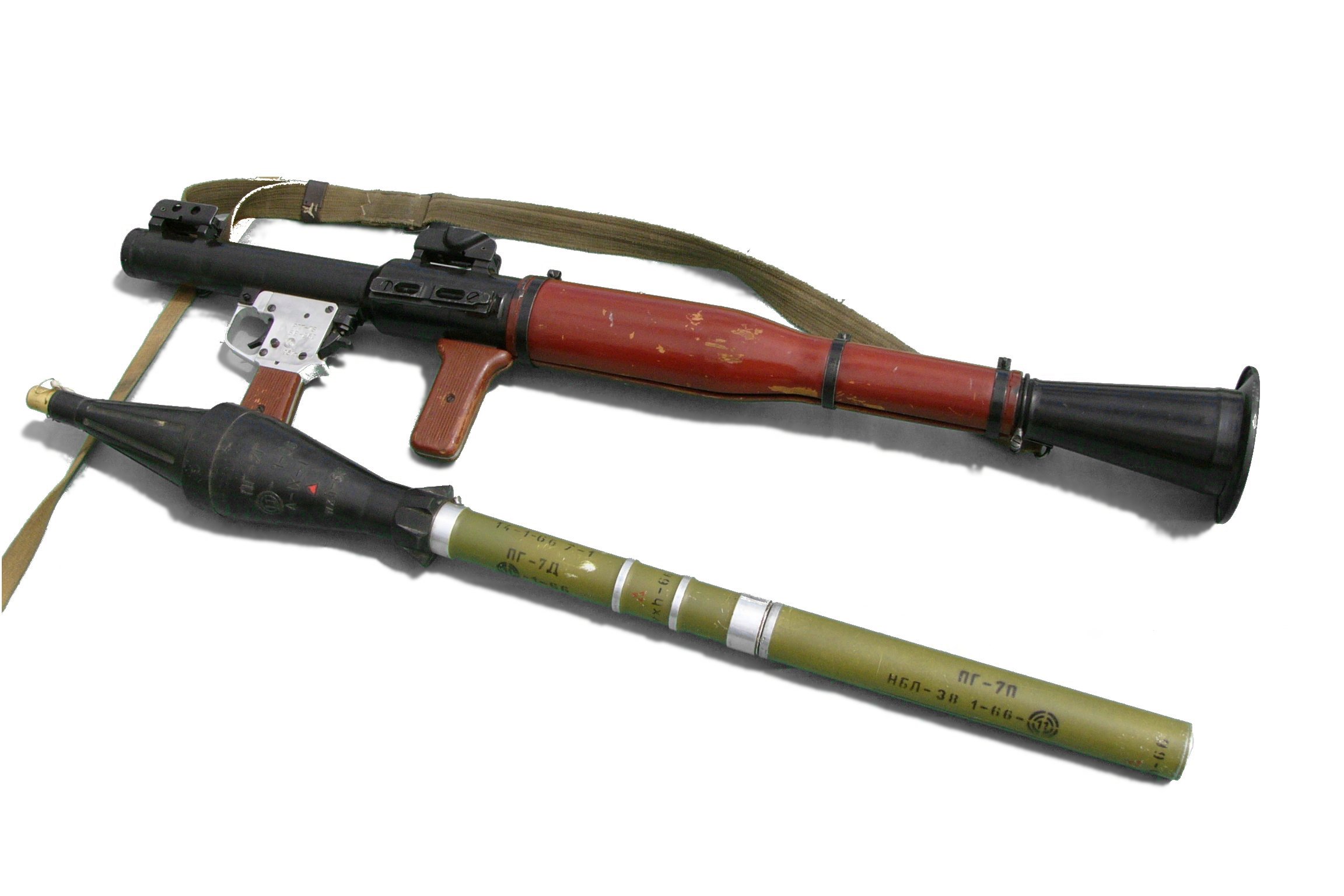
The most direct and consequential legacy of the Panzerfaust is the Soviet RPG series — specifically the RPG-7, which became the world's most widely used anti-tank weapon and remains in active service today on virtually every continent. Soviet weapons engineers studied captured Panzerfausts intensively after 1945, and the core principles — infantry-portable, shaped charge warhead, simple operation — directly informed the development of the RPG-2 in 1949 and the iconic RPG-7 in 1961.
The RPG-7 added a reusable launcher and a rocket-boosted projectile for greater range, but the conceptual DNA is pure Panzerfaust. Every RPG-7 carries the ghost of the Panzerfaust in its design philosophy.
Modern Disposable Anti-Tank Weapons
Beyond the RPG lineage, the Panzerfaust directly inspired the post-war development of disposable anti-tank weapons that are standard infantry equipment today — the American M72 LAW, the Swedish AT4, the German Armbrust, and the modern Panzerfaust 3. The modern Panzerfaust 3, despite sharing its name, is an entirely different weapon in engineering terms — but it represents the same fundamental concept at a modern level of sophistication.
The Panzerfaust's Enduring Legacy in Military History
The Panzerfaust matters because of what it changed. It took anti-tank capability away from the specialists — the dedicated gun crews with their expensive, heavy equipment — and handed it to every infantryman who could hold a tube and pull a trigger. It proved that shaped charges could be made cheap enough and simple enough for a weapon you threw away after one shot. It showed that disposability wasn't just acceptable in weapons design — it was actually an advantage. And it permanently rewired the relationship between tanks and infantry.
Before the Panzerfaust, a tank commander rolling through close terrain against infantry with no anti-tank guns could feel reasonably safe. After the Panzerfaust — and every weapon it inspired — that feeling was gone forever. Any infantryman might be carrying something that could kill you. That change echoes through every piece of armored warfare doctrine written since 1944.
The weapon that a frightened German teenager could pick up, aim, and fire without instructions was the same weapon that inspired the RPG-7 that has been fired in every conflict since. The crude steel tube with the oversized warhead turned out to be one of the most influential weapons designs of the 20th century. And that is a legacy worth understanding fully.
Frequently Asked Questions
What is the difference between the Panzerfaust 30, 60, and 100?
The primary differences are effective range and propellant charge size. The Panzerfaust 30 had a nominal range of 30 meters; the 60 doubled this through a larger propellant charge and improved sights; the 100 extended to 100 meters with another propellant increase and a refined sighting system. Penetration improved from approximately 140mm (Panzerfaust 30) to approximately 200mm (Panzerfaust 60 and 100). The Panzerfaust 100 also introduced a reusable trigger mechanism.
Was the Panzerfaust dangerous to the soldier who fired it?
Yes, significantly. The back-blast from the propellant was capable of causing serious burns and injuries to anyone within several meters behind the firer. In enclosed spaces, this created genuine risk to the firer and anyone nearby. Additionally, firing at such close range to a tank put the soldier within the tank's machine gun engagement zone, making the engagement extremely dangerous regardless of whether the shot was successful.
Could the Panzerfaust penetrate the armor of any Allied or Soviet tank?
No single variant could reliably penetrate the frontal armor of all tanks. The Soviet IS-2 heavy tank, with up to 120mm of sloped frontal armor, could potentially defeat a Panzerfaust hit frontally under some conditions. However, all variants could reliably penetrate the side and rear armor of any tank in Allied or Soviet service. German training emphasized attacking from the flank or rear for this reason.
How did the Panzerfaust influence the development of the RPG-7?
Soviet engineers captured large quantities of Panzerfausts and studied German anti-tank weapon technology extensively after 1945. The core principles — infantry-portable, shaped charge warhead, simple operation, single-soldier use — directly informed the RPG-2 (1949) and RPG-7 (1961). The RPG-7's worldwide proliferation means the Panzerfaust's conceptual legacy has arguably had more impact on post-war warfare than any other WWII-era weapon.
Are any Panzerfaust weapons still in use today?
The original WWII Panzerfausts are long gone. Germany built the Panzerfaust 3 — a completely modern weapon that shares the name and the basic idea but nothing else — which is still in Bundeswehr service and used by several NATO countries. Really, though, the entire category of disposable anti-tank weapons that soldiers carry today — the AT4, M72 LAW, and their equivalents around the world — all exist because the original Panzerfaust proved the concept worked.