

Some weapons age gracefully. Others become obsolete within years of deployment, quietly retired into museums and storage yards while newer systems take their place. And then there are the rare few that defy every expectation — systems that keep showing up in conflicts decades after they were supposed to be irrelevant, keep scoring kills that shock the military world, and keep forcing adversaries to rethink assumptions they were convinced were settled. The S-125 Neva belongs firmly in that last category. This is a SAM system that entered Soviet service in 1961 — designed to complement, not replace, the already-deployed S-75 Dvina. A system that, by any reasonable projection, should have been a Cold War footnote by the 1990s. And yet in 1999, a Serbian S-125 battery reached up and swatted an American F-117 Nighthawk stealth aircraft out of the night sky — and in doing so made every air force on earth suddenly very nervous about how invisible their stealth aircraft actually were.
What Is the S-125 Neva/Pechora?
The S-125 Neva (NATO reporting name: SA-3 Goa) is a Soviet-developed low-to-medium altitude surface-to-air missile system that entered service with the Soviet military in 1961. It was named, like its predecessors, after a Soviet river — the Neva, which flows through Leningrad (now St. Petersburg). Export versions were designated Pechora, after another Russian river, and this name became the more common designation in international service.
Unlike the S-75 Dvina, which was designed for high-altitude engagement, the S-125 was specifically built to fill the low-altitude gap — to engage targets flying below the S-75's minimum engagement threshold. Where the S-75 struggled to track and intercept aircraft flying below roughly 300–500 meters, the S-125 was built to kill precisely those targets: fast, low-flying attack aircraft using terrain-following flight to evade radar coverage and stay beneath the SAM umbrella.
The system fires a two-stage solid-propellant missile — a big step away from the S-75's hazardous liquid-fuel setup — and uses a continuous wave radar guidance system that turned out to be harder to jam than the S-75's Fan Song. It traveled on wheeled vehicles and could be set up in a few hours, which gave it real mobility in the field. In short, it plugged a dangerous hole. And it plugged it well enough to still be killing things six decades later.
Why the S-125 Had to Be Built — Filling the Low-Altitude Gap
The Loophole in Soviet Air Defense
By the late 1950s, the Soviets had built an impressive high-altitude air defense network. The S-25 Berkut protected Moscow with its fixed rings of missile sites. The S-75 Dvina was deploying across the country in mobile batteries, providing coverage against high-altitude bombers and reconnaissance aircraft. On paper, Soviet airspace was becoming increasingly dangerous for American strategic aircraft.
But there was a problem. A big one. The S-75's minimum engagement altitude — below which it simply could not reliably track or intercept targets — created a dead zone from the ground up to roughly 300–500 meters. An aircraft flying low and fast, hugging the terrain to avoid radar detection, could potentially slip under the entire S-75 network. And Western aircraft designers and tacticians had figured this out.
Western Low-Level Tactics Force a Soviet Response
By the late 1950s, NATO tactical air forces — aware that the S-75 was coming and aware of its high-altitude capability — were actively developing low-level attack doctrines. The F-105 Thunderchief, the Canberra, and various other NATO tactical aircraft were being trained to penetrate Soviet-aligned airspace at low altitude and high speed, using terrain masking to defeat radar coverage.
Soviet air defense planners could see exactly what was happening. The high-altitude SAM network they had so painstakingly built was going to be partially negated by the simple expedient of flying under it. The response had to be a system that covered the low-altitude band — something that could engage aircraft at altitudes from nearly ground level up to the point where the S-75 became effective, creating a seamless layered defense with no exploitable gaps. The development order for what would become the S-125 came directly from this strategic logic. It wasn't an optional addition to Soviet air defense. It was a necessary one.
Development History
The Engineers and Design Bureaus
Like the S-75, the S-125 was developed through the Soviet defense industry's specialized bureau system. The overall system development was again led by Alexander Raspletin at KB-1 — the man who was becoming the godfather of Soviet SAM development. The missile itself came from MKB Fakel under Pyotr Grushin, the same designer responsible for the V-750 missile of the S-75. Grushin's bureau was becoming the go-to source for Soviet SAM missiles, and the V-600 they developed for the S-125 was a significantly different engineering challenge from the large liquid-fueled V-750.
Going with solid propellant for the S-125's missile was a big deal for the crews who had to work with it. Solid-propellant missiles sit on the launcher ready to go — you don't have to pump toxic fuel into them before you can shoot, which is what made the S-75 such a nightmare to operate under combat conditions. The downside was less raw energy compared to liquid propellants, which meant shorter range and a lower ceiling. But for a system designed to kill things flying low, that tradeoff made perfect sense.
Testing and Trials at Kapustin Yar
Testing happened through the late 1950s at Kapustin Yar in Kazakhstan. The trials went reasonably well, but the engineers ran into a serious problem: at very low altitude, the radar kept picking up reflections from the ground — hills, trees, buildings — and confusing them with the actual target. Sorting out this ground clutter issue was probably the hardest single problem the S-125 development team had to crack, and the solutions they came up with ended up shaping Soviet low-altitude radar design for years afterward.
The system was accepted into Soviet military service in 1961 — just four years after the S-75 had entered service, which speaks to the urgency the Soviets placed on closing the low-altitude vulnerability gap as quickly as possible.
Technical Specifications
The Low Blow Radar System

The S-125 uses two primary radar systems. The P-15 Flat Face radar served as the acquisition and search radar — a relatively long-range system that scanned for incoming targets and provided initial tracking data, operating in the UHF band for reasonable detection range and some resistance to certain jamming techniques.
The SNR-125 Low Blow radar was the real brains of the operation — the S-125's equivalent of the S-75's Fan Song. It tracked both the target and the missile at the same time and fed steering commands to the missile to guide it in. Here's the thing that mattered most: the Low Blow worked on a different frequency band from the Fan Song. That meant jamming gear built specifically to blind the S-75 didn't necessarily do anything to the S-125. A pilot whose electronic warfare suite was tuned to defeat one system could fly right into the other's kill zone thinking he was protected — and find out the hard way that he wasn't.
The V-600 and V-601 Missile Family
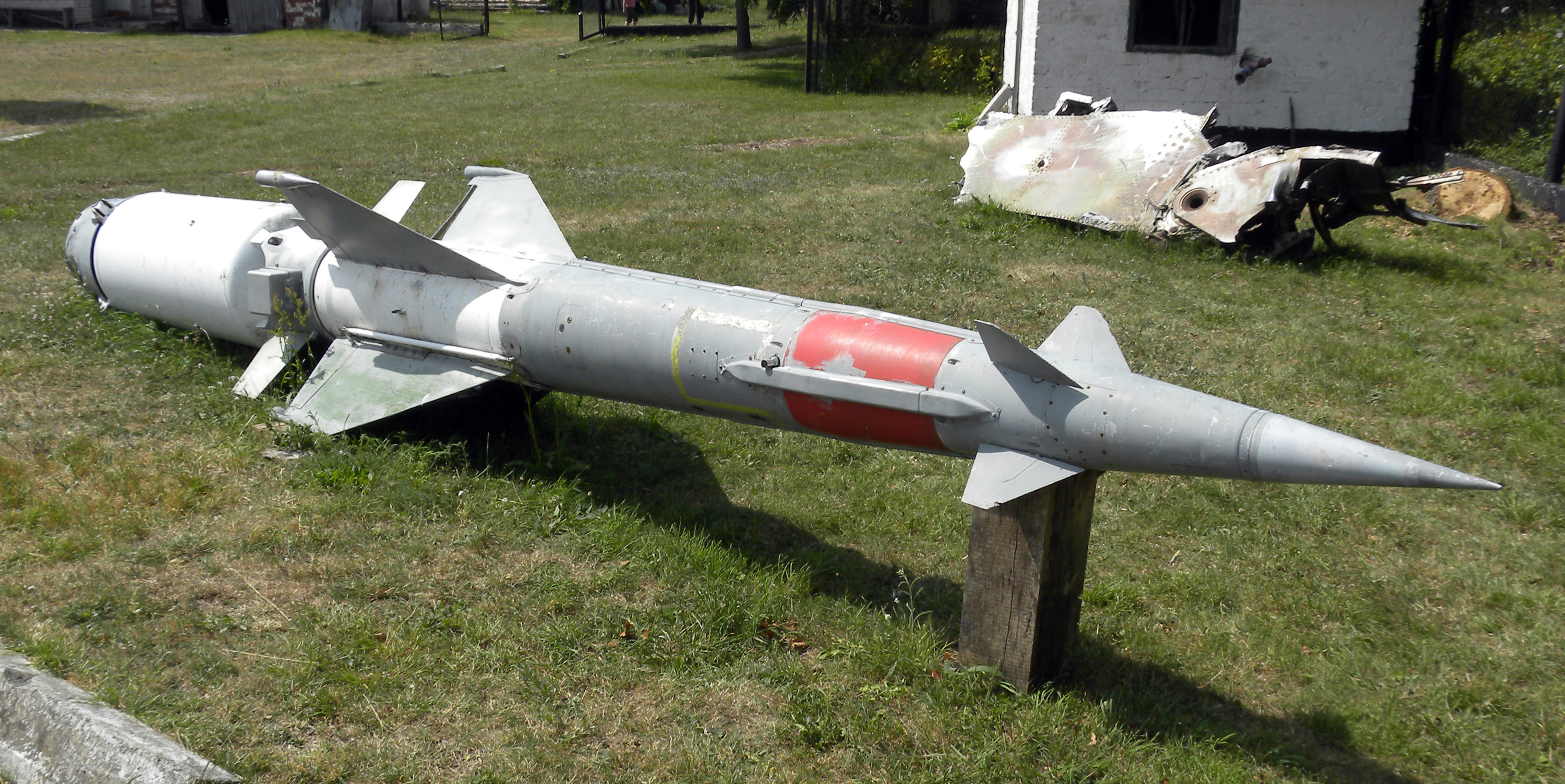
The missile at the heart of the S-125 system — designated V-600 in its original form — was a compact, two-stage solid-propellant weapon significantly smaller and lighter than the S-75's V-750. The production missile was approximately 5.9 meters long with a launch weight of around 980 kilograms — less than half the mass of the V-750. This smaller size made it easier to transport, store, and handle, though it came at the cost of reduced range and ceiling compared to the larger system.
The launcher typically carries two or four missiles in ready-to-fire configuration, and the reload process is considerably simpler and faster than the S-75's liquid-fuel handling requirements.
Propulsion and Flight Profile
The two-stage solid-propellant configuration uses a boost-sustain approach — a powerful first stage accelerates the missile rapidly off the launcher, and a second stage sustains its velocity through the engagement phase. The all-solid configuration means that missiles can be stored in their launch-ready state for extended periods without the maintenance and safety concerns associated with liquid propellants.
Maximum speed of the missile reaches approximately Mach 3 — fast enough to engage supersonic targets under most engagement geometries. The system is designed to engage targets at altitudes from roughly 20 meters to approximately 18,000 meters, and at slant ranges of 3.5 to 35 kilometers depending on the variant. That 20-meter minimum altitude figure is one of the S-125's most important tactical characteristics — it means that aircraft flying at extremely low altitude still cannot escape the system simply by flying lower.
Warhead and Kill Mechanism
The V-600 series missiles carry a high-explosive fragmentation warhead weighing about 60 kilograms — much smaller than the S-75's 190-kilogram monster, which makes sense given that the S-125 was shooting at closer ranges and smaller aircraft. The warhead uses a radar proximity fuze backed up by a command detonation option. Its fragmentation pattern was designed specifically for low-altitude work, which sounds straightforward until you think about the problem: when your missile and the target are both screaming along at low altitude, how does the proximity fuze tell the difference between the aircraft it's supposed to hit and the ground that's rushing up from below? That was a genuinely nasty engineering problem, and the S-125 designers solved it with specialized fuze logic that accounted for the missile's height above terrain.
How the S-125 System Operates — Step by Step
When an incoming aircraft is detected by the P-15 search radar, the target data is handed off to the SNR-125 Low Blow fire control radar, which attempts to acquire and lock onto the target. Once lock is established, the system calculates the engagement geometry — determining whether the target is within the missile's kinematic reach and what launch angle is optimal.
At launch, the solid booster ignites and the missile leaves the rail within a fraction of a second — much faster than the liquid-fueled S-75, which required a brief ignition sequence. The Low Blow radar tracks both the outgoing missile and the target aircraft simultaneously, and the ground computer generates continuous steering commands transmitted to the missile's autopilot. The missile flies a proportional navigation intercept course — steering not directly at the target's current position but at the predicted future position, cutting off the target's escape route.
At detonation proximity, the radar fuze triggers the warhead. The entire sequence from radar lock to detonation can happen in as little as 15 seconds at close range. Against a low-flying aircraft with limited time to detect the radar lock and execute evasive maneuvers, this speed of engagement is one of the S-125's most dangerous characteristics.
Integration with Soviet Layered Air Defense
Working Alongside the S-75
The S-125 was never intended to operate in isolation. Soviet air defense doctrine explicitly called for layered coverage — overlapping systems at different altitude bands working together to create a threat environment with no safe corridors. The S-125 and S-75 were designed to work as a team, with their respective engagement envelopes overlapping in the medium-altitude band to ensure that aircraft transitioning between altitude levels were never in a gap between coverage zones.
A typical Soviet air defense regiment might have batteries of both systems deployed in mutually supporting positions, with their radar coverages coordinated to prevent gaps and their engagement zones overlapping to allow simultaneous or sequential engagement of the same target by different systems.
The Kill Zone Overlap Strategy
The genius of the Soviet layered approach was that it forced attacking aircraft into an impossible dilemma. Fly high to avoid the terrain complexities of low-altitude flight — and you're in the S-75's engagement envelope. Fly low to duck under the S-75's minimum altitude — and you're in the S-125's kill zone. Add ZSU-23-4 self-propelled anti-aircraft guns and shoulder-launched SA-7 missiles for very short range and very low altitude coverage, and you've created a threat environment where no single evasive tactic is sufficient.
This layered philosophy — demonstrated most dramatically during the 1973 Yom Kippur War — became the template for every sophisticated air defense network built anywhere in the world in the decades that followed.
Combat History — The S-125 Goes to War
The War of Attrition — Egypt vs. Israel, 1969–1970
The S-125's first significant combat employment came during the Egyptian-Israeli War of Attrition, a grinding conflict fought along the Suez Canal following the Six-Day War. By 1969, Israeli deep-penetration air strikes into Egypt proper had reached a point where Egyptian President Nasser flew to Moscow and personally requested Soviet intervention. The Soviets responded by deploying Soviet-crewed S-75 and S-125 batteries to Egypt — a decision that put Soviet personnel directly in harm's way of Israeli airstrikes for the first time.
The arrival of the S-125 batteries immediately changed the tactical situation. Israeli aircraft that had been operating with relative freedom at low altitude suddenly found that option far more dangerous. The S-125's low-altitude capability forced Israeli pilots to alter their attack profiles, and losses began climbing. The War of Attrition ended in a ceasefire in August 1970, by which point the integrated Egyptian air defense network had demonstrably constrained Israeli air operations in ways that hadn't been possible before.
The Yom Kippur War, 1973
The 1973 war was where the S-125 truly demonstrated its value as part of a coordinated air defense network. Egyptian and Syrian forces, advised intensively by Soviet specialists, deployed their air defense systems in carefully interlocked arrangements that left almost no gaps for Israeli aircraft to exploit.
In the first three days of fighting, Israeli air losses were catastrophic by any standard — estimates range from 40 to 50 aircraft lost in the opening phase alone. The combination of S-75s handling medium and high altitude, S-125s covering the low-altitude band, ZSU-23-4s providing extremely close-range coverage, and SA-7s giving individual infantry units air defense capability created a genuinely lethal environment at every altitude level.
The lessons of 1973 reverberated through every serious air force in the world. No longer could any military assume that low-altitude flight was a reliable sanctuary from SAM threats. The S-125 had made the low-altitude environment just as dangerous as the high-altitude one.
Angola and African Conflicts
The S-125 showed up across Africa in a range of conflicts. In Angola, Cuban crews operated S-125 batteries on behalf of the MPLA government, and these systems made life significantly harder for South African Air Force pilots conducting operations there throughout the 1980s. You don't fly casually into airspace where SA-3s might be waiting, regardless of how confident you are in your aircraft. The S-125 threat was real enough to shape how South Africa fought in Angola for years.
The Gulf War, 1991
Iraq operated a large number of S-125 systems as part of its extensive integrated air defense network. During Operation Desert Storm, coalition forces systematically suppressed and destroyed Iraqi air defenses using Wild Weasel tactics, anti-radiation missiles, and precision-guided munitions. The Iraqi S-125 batteries, like virtually all Iraqi air defense assets, were degraded rapidly in the opening phase of the air campaign.
The Gulf War seemed to confirm that, against a fully equipped modern adversary with sophisticated electronic warfare and anti-radiation missile capability, even overlapping SAM networks could be suppressed efficiently. That conclusion proved premature. Eight years later, over Yugoslavia, the S-125 delivered its most stunning rebuttal.
The F-117 Shootdown — The Most Famous Moment in S-125 History
How Colonel Zoltán Dani Did the Impossible
On the night of March 27, 1999, during NATO's Operation Allied Force bombing campaign against the Federal Republic of Yugoslavia, Colonel Zoltán Dani — commander of the 3rd Battalion of the 250th Air Defense Missile Brigade of the Yugoslav Army — shot down an American F-117A Nighthawk stealth aircraft. It was the first and, to date, only time a stealth aircraft has been destroyed in combat by an enemy air defense system.
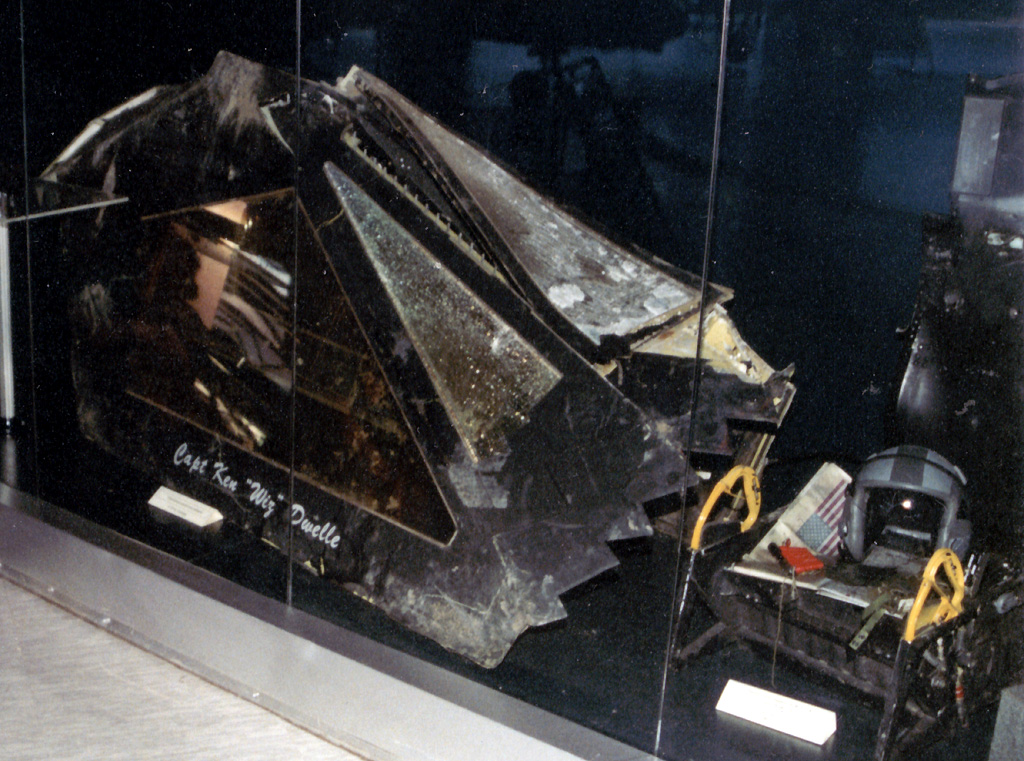
The F-117 was the stuff of American airpower mythology. It had flown through the most heavily defended airspace in the world during Desert Storm without a scratch. Its faceted shape and radar-absorbing materials were specifically designed to scatter radar energy away from the emitting radar, making it essentially invisible to conventional fire control radars.
Dani didn't get lucky. He'd been preparing for weeks, studying how the Americans flew their stealth missions, tracking their patterns, thinking about where the F-117's design had weak points. And he found them. The F-117's stealth shaping was optimized to scatter the high-frequency radar waves that most modern fire control radars use. But the S-125's Low Blow radar works at lower frequencies — longer wavelengths — where the stealth geometry is less effective. At those frequencies, the F-117 isn't invisible. It's just harder to see. And "harder to see" is not the same as "impossible to hit."
He also knew that the F-117's radar signature increased significantly when its bomb bay doors were open — a brief but detectable moment of higher visibility during each bomb run. And he knew the likely flight paths from weeks of observation and signals intelligence.
On the night of the kill, Dani used strict radar emission control — keeping his radar off until the precise moment he needed it, minimizing the time available for NATO anti-radiation missiles to home in on his position. When the F-117 passed in its predictable corridor at the predicted time, Dani switched on his radar briefly, acquired the target, fired two V-601 missiles, and switched his radar off again. The first missile missed. The second detonated close enough to the F-117 to severely damage it. Pilot Dale Zelko ejected and was recovered by American search and rescue forces.
What the Shootdown Proved
The shootdown hit the defense world like a thunderclap. Stealth, it turned out, is not invisibility — it's a reduction in radar cross-section that a smart operator with the right equipment, the right tactics, and enough discipline can work around. A missile system designed in the 1950s had just killed the most advanced combat aircraft in the world, forty years after it entered service. Every assumption about stealth aircraft being untouchable suddenly needed rethinking, and the rethinking happened fast.
The wreckage was studied by foreign intelligence services — and presumably by China, which had intelligence connections with Yugoslavia at the time — providing valuable data on American stealth technology. Colonel Dani became a national hero in Serbia and has since spoken openly about his tactics in interviews, providing military historians with an unusually detailed first-hand account of how the kill was achieved.
Export Success — The S-125 Around the World
The S-125 was exported extensively, though not quite as broadly as the S-75. Its list of operators reads like a tour of Cold War geopolitics: Egypt, Syria, Libya, Algeria, Cuba, Vietnam, North Korea, India, Poland, East Germany, Czechoslovakia, Hungary, Bulgaria, Romania, Yugoslavia, Angola, Mozambique, Ethiopia, Somalia, Peru, and several others received the system in various configurations.
The export version — designated Pechora — was generally similar to the Soviet military version but sometimes with slightly reduced capabilities in the electronic countermeasures and guidance systems. China studied the S-125 carefully, and the HQ-7 and related systems drew on S-125 technology, though the connection is more indirect than China's outright reverse-engineering of the S-75.
In many export countries, the S-125 remained in service long after the Soviet Union itself had retired the system, simply because it continued to function and no affordable replacement was available. Several Middle Eastern and African operators have kept their systems running through a combination of local maintenance expertise and assistance from Russian or Eastern European technicians offering commercial upgrade packages.
Variants of the S-125 — Evolution of a Survivor
Original Soviet Variants
- S-125 Neva — The original 1961 production version using the V-600 missile. Effective against targets from roughly 200 meters to 10,000 meters altitude.
- S-125M Neva-M — Improved variant with the upgraded V-601 missile, extending maximum engagement altitude to approximately 18,000 meters and increasing maximum range. Also featured improved guidance electronics with better ECCM capability. Became the primary Soviet operational version.
- S-125M1 Neva-M1 — Further refinement with enhanced resistance to electronic jamming and improved guidance accuracy. The definitive Soviet-era production version.
Modernized Post-Soviet Variants
Since the Soviet Union collapsed, an entire cottage industry has grown up around upgrading the S-125. Dozens of countries still operate the system and want to keep it relevant, and there's no shortage of companies willing to help them do exactly that:
- Pechora-2M — A Russian-developed modernization package offering improved radar capabilities, digital fire control, the ability to engage cruise missiles and UAVs, and extended engagement ranges.
- Neva-MR (Belarus) — A Belarusian modernization variant with a new digital fire control system and enhanced ECCM features.
- Avenija (Serbia) — A Serbian domestic modernization incorporating modern digital electronics and reportedly enhanced capability against low-observable targets — an ironic nod to the system's most famous achievement.
- Newa SC (Poland) / NEVA-M (Czech Republic) — NATO member upgrades of inherited Warsaw Pact systems, bringing them to a standard compatible with NATO electronic systems and communications protocols.
Strengths and Weaknesses of the S-125
What Made It Dangerous
The S-125's biggest advantage is the thing it was originally built to do: kill aircraft flying low. That need hasn't gone away, and it probably never will. Beyond that, its solid-propellant missiles mean it can shoot faster than the S-75 ever could. Its radar works on frequencies that don't get jammed as easily by equipment designed to blind higher-frequency systems. And it's simple enough that well-trained crews can keep it running and fighting under field conditions without a factory full of technicians backing them up.
And then there's the F-117 kill, which proved something you can't put in a specifications table: in the right hands, the S-125 can punch way above its weight class. You can't design for that. You can't plan on it. But when it happens, it changes the conversation about what "obsolete" actually means.
Where It Falls Short
The S-125 has genuine and well-understood limitations. Its maximum engagement range — 35 kilometers in the best case for modernized variants — is considerably shorter than the S-75 or any modern long-range SAM system. Its guidance system, while improved in modernized variants, remains based on radio command principles fundamentally vulnerable to sufficiently powerful jamming. Anti-radiation missiles calibrated to the Low Blow radar's frequency characteristics pose a serious threat. And the system provides no capability against ballistic missiles.
Against a full-scale modern strike package with dedicated electronic warfare aircraft, anti-radiation missiles, and precision standoff weapons, a standalone S-125 battery faces extremely difficult odds. Its survival depends on the kind of strict emissions discipline and tactical creativity that Colonel Dani demonstrated — valuable, but not something that can be assumed for every operator in every situation.
The S-125 vs. MIM-23 Hawk — A Cold War Comparison

The S-125's closest Western equivalent throughout the Cold War was the American MIM-23 Hawk system, which entered service in 1960 — just one year before the S-125. Both systems were designed for medium-to-low altitude air defense. Both used semi-active radar guidance. Both proved durable enough to remain in service for decades. The Hawk was deployed by the United States and numerous NATO allies, and was exported to Israel, Iran, Japan, South Korea, and many others — matching the S-125's broad export footprint.
In terms of performance, the systems were broadly comparable through most of their service lives, with advantages shifting back and forth as each was upgraded through successive variants. The Hawk demonstrated its effectiveness during the 1973 Yom Kippur War on the Israeli side — the same conflict where the S-125 was proving itself on the Arab side — with both systems scoring kills in the same airspace against the same types of targets.
What's interesting is how two completely different military-industrial systems, working in total secrecy from each other, independently arrived at almost the same answer to the same problem. Different engineering, different organizations, different philosophy — same basic weapon.
Modernization Programs — Keeping an Old System Alive
The fact that the S-125 is still relevant in the 2020s is probably the most surprising part of its story. And it's not because countries are too poor to replace it — though some are — it's because multiple countries have actively invested in keeping it alive and making it better.
The core modernization philosophy involves replacing the original analog electronics with modern digital fire control systems, adding new radar signal processing that improves performance against low-observable targets and reduces vulnerability to jamming, integrating the system into modern command and control networks, and in some cases providing the capability to engage cruise missiles and UAVs that the original system was not designed to handle.
Russia's Pechora-2M program, various Eastern European national upgrades, and Serbia's Avenija program all follow this basic template. The economics are compelling — a thoroughly modernized S-125 costs a fraction of a new medium-range SAM system and provides a meaningful capability improvement over the original. For countries operating on modest defense budgets, the math often works out strongly in favor of upgrading what you have.
Retirement, Current Status, and the Ukraine War
Russia retired its S-125 systems from frontline service in the 1990s and early 2000s as S-300 batteries assumed full coverage. For Russia, the system is well and truly in the past.
For many export customers, however, the story is very different. Numerous countries across the Middle East, Africa, and Asia continue to operate S-125 systems in various states of modernization. North Korea maintains a large inventory as a core component of its air defense network. Several former Yugoslav states inherited and continue to operate the system.
And then there's Ukraine. The war that started in 2022 has seen both Ukrainian forces and Russian-backed forces pulling S-125 systems out and actually using them in combat — more than sixty years after the system first entered service. Think about that. A weapon designed under Khrushchev is still being fired in anger in the 2020s. That has to be one of the longest active combat careers of any major weapons system ever built.
The S-125's Enduring Legacy
The S-125 Neva's legacy works on a few different levels. The most obvious one: it plugged the low-altitude gap in Soviet air defense and proved it was real by actually killing aircraft at altitudes the S-75 simply couldn't reach. On a bigger scale, it helped build the layered air defense doctrine — the idea that you stack different systems at different altitudes so there's no safe corridor anywhere — that every serious air defense network in the world is still built around today.
But the F-117 shootdown is the moment everyone remembers, and for good reason. It showed that old technology in smart hands beats new technology in careless hands. It forced the whole world to reckon with the fact that stealth has limits. And it became a case study taught in military academies everywhere — not because the S-125 is such a great weapon, but because Colonel Dani's kill is a near-perfect example of what happens when skill, creativity, and discipline matter more than the spec sheet.
The S-125 Neva began its life as a supporting player — a system designed to fill the gap left by its more famous sibling, the S-75 Dvina. It was never going to be the headline act. It was the low-altitude workhorse, the system that covered the ground that the bigger, longer-ranged missiles couldn't reach. And yet here we are, more than six decades after it entered service, and the S-125 is still being fired in active conflicts. It has shot down aircraft on four continents. It achieved the single most shocking air defense kill of the post-Cold War era. And it has spawned an entire ecosystem of modernization programs that keep it tactically relevant in the 21st century. The low-altitude killer refuses to die. And given its track record, perhaps that stubbornness is entirely appropriate.
Frequently Asked Questions
How did the S-125 manage to shoot down an F-117 stealth aircraft when it was supposedly invisible to radar?
The F-117's stealth design was optimized to reduce its radar cross-section against high-frequency fire control radars. The S-125's Low Blow radar operates at lower frequencies where stealth shaping is less effective, producing a detectable radar return. Colonel Zoltán Dani exploited this by using strict radar emissions discipline, switching his radar on only briefly to acquire and engage the target. The F-117's predictable flight corridor and the brief window when its bomb bay doors were open also contributed to the successful engagement.
What is the difference between the S-125 Neva and the S-125 Pechora?
Neva was the designation used for the Soviet military's domestic version. Pechora was the export designation used for systems supplied to allied and client states. The two versions were functionally very similar, though export Pechora systems sometimes had slightly reduced electronic countermeasures capability compared to the Soviet domestic standard. Later modernization programs are often marketed under the Pechora-2M designation regardless of the original variant.
Can modernized S-125 systems engage cruise missiles and UAVs?
Modern upgrade packages such as the Pechora-2M specifically claim the ability to engage cruise missiles and UAVs. The new digital fire control systems provide faster target processing and improved tracking of smaller, slower targets. However, effectiveness in actual combat conditions depends heavily on the specific upgrade package, operator training quality, and the nature of the threats being engaged.
Why do so many countries still operate the S-125 decades after it was designed?
Simple economics. The S-125 does a real job — low-altitude air defense — and it does it at a fraction of what a new system would cost. Upgrade packages let countries squeeze more life and capability out of hardware they already own, with crews who already know how to use it and supply chains that already exist. For a country that can't afford to buy new, modernizing an S-125 is a much smarter bet than going without.
Has the S-125 been used in the Ukraine conflict?
Yes. There are confirmed reports of S-125 systems being employed in the conflict in Ukraine. Both Ukrainian forces — drawing on inherited Soviet-era equipment — and Russian-backed forces have reportedly used S-125 systems in operational roles, extending the system's active combat career to more than six decades after its 1961 deployment.